
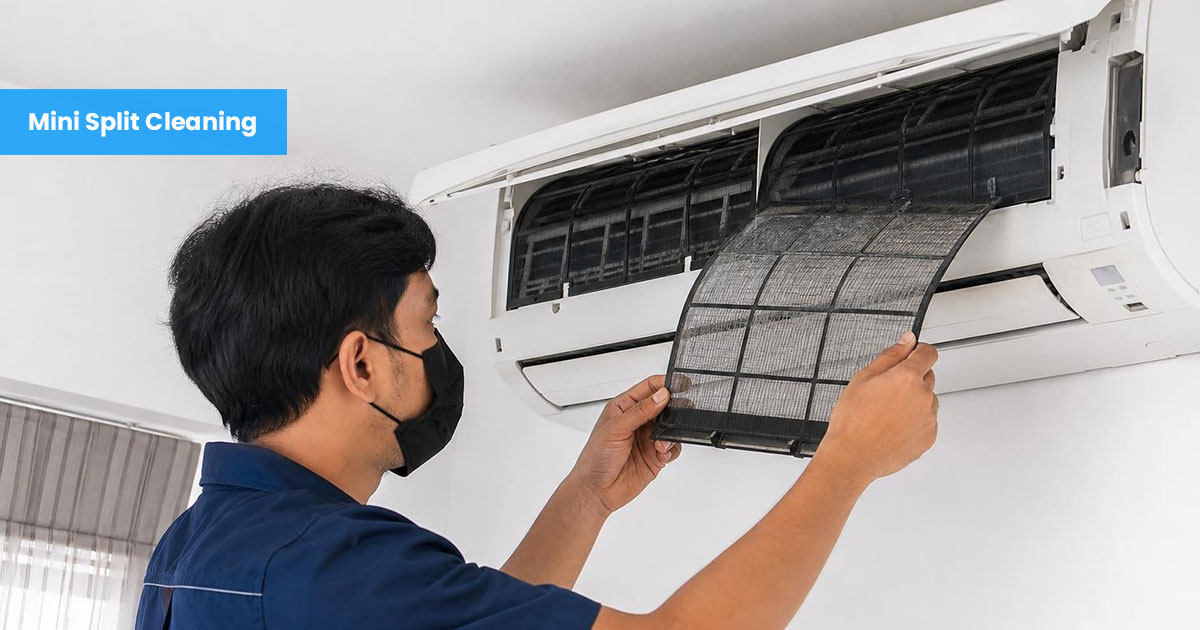
Mini Split Cleaning Guide 2026: Costs, Steps, Benefits
TL;DR
Mini split cleaning is the process of thoroughly cleaning the internal components of a ductless split system air conditioner, including filters, evaporator coils, blower wheel, and drain lines. In Australia, this is called split system cleaning. Regular cleaning prevents mould growth, improves air quality, cuts energy use by up to 30%, and extends the life of your unit. Filter cleaning alone is not enough, especially in humid subtropical climates like the Gold Coast.
Mini split cleaning refers to the professional or routine maintenance process of removing dust, mould, bacteria, and debris from the internal components of a ductless split system air conditioner. The term “mini split” is American. In Australia, the same hardware is called a split system or split system air conditioner. If you’ve searched for “mini split cleaning” and you live in Australia, you’re looking for split system cleaning.
The distinction matters because a lot of the advice you’ll find online uses the US terminology. The process, the components, and the reasons for cleaning are identical regardless of which term you use.
Explore our air conditioner cleaning service to see what a professional deep clean includes.
What Is a Mini Split (Split System)?
A mini split is a ductless heating and cooling system split into two main components: an outdoor compressor/condenser unit and one or more indoor air handlers. The word “mini” refers to the compact size of the indoor units compared to central ducted systems.
These systems are popular because they allow zone-by-zone temperature control without ductwork. Each indoor unit mounts on a wall (most common), ceiling, or floor and connects to the outdoor unit via refrigerant lines.
In Australian homes and small commercial spaces, split systems are the most common cooling solution. Walk into almost any Gold Coast apartment, townhouse, or office and you’ll see one mounted on the wall. They’re the same thing as a mini split. Different name, same machine.
What Does Mini Split Cleaning Involve?
Mini split cleaning has two distinct tiers, and confusing them is one of the biggest mistakes homeowners make.
Routine Filter Maintenance (DIY)
This is the basic tier. You pop open the front panel of your indoor unit, slide out the mesh filters, and rinse them under lukewarm water. No chemicals needed. Water only is the key to cleaning mini split filters effectively without damaging the mesh. Let them dry completely before reinstalling.
You should also wipe down the exterior housing, louvres, and front panel. This takes about 10 minutes and should happen every four to six weeks.
Professional Deep Cleaning
This is where the real work happens. A deep clean targets the internal components that routine maintenance can’t reach:
Evaporator coils. The technician applies a foam cleaner, lets it soak to break down buildup, then rinses with pressurised water. Dirty coils are one of the primary causes of reduced cooling power and higher energy bills.
Blower wheel (barrel fan). This is the single most neglected component in any split system, and arguably the most important to clean. More on this below.
Condensate drain pan and drain line. These collect and channel moisture away from the unit. When blocked, water backs up and drips down your wall or ceiling. The drain line gets flushed to prevent blockages and eliminate odours.
Housing, louvres, and front panel. Cleaned with an antibacterial solution to remove surface mould and bacteria.
Outdoor condenser unit. The condenser coil gets rinsed, fan blades are inspected, and debris is removed from the housing.
Professionals use a mini split cleaning bag (also called a cleaning jacket or bib) that wraps around the indoor unit to catch all the dirty water and debris during the wash. Most split system cleans take 60 to 90 minutes per unit.
For a closer look at how professional cleaning improves efficiency, read about why AC cleaning matters.
Why Mini Splits Need Regular Cleaning
The Mould Problem
Here’s the thing most people don’t realise: mini splits are uniquely vulnerable to biological contamination compared to ducted systems. The inside of each component provides excellent conditions for bacteria, mould spores, and other contaminants to thrive.
A mould remediation specialist quoted by Boston.com explained it simply: mould needs humidity, the right temperature range, and a food source (dust). To stop mould, you need to eliminate at least one of those three conditions. Inside an operating mini split, it’s always the right temperature and there’s always humidity. The only variable you can control is keeping the unit clean.
Indoor air quality expert Jeffrey C. May has pointed out that mini split filters are minimal, essentially insect screens rather than true air filters. They don’t filter very much at all. This means dust, skin cells, and airborne particles pass right through and settle on internal components.
The Blower Wheel Problem
This is the insight that changes how you think about mini split cleaning.
Practitioners on HVAC forums report that the blower wheel gets contaminated by room air drawn in at the air outlet, not by air passing through the filter and coil. One technician on HeatingHelp.com described customers who clean their filters religiously and have spotless coils, yet the blower wheel is packed with biological growth.
This means filter cleaning alone is never enough. The blower wheel operates in a different airflow path, and it accumulates mould and grime regardless of how diligent you are with filter maintenance. Only a professional deep clean can properly address it.
Dirty Sock Syndrome
If your air conditioner smells like sweaty gym socks when you switch it on, that’s Dirty Sock Syndrome. It’s caused by mould and bacteria buildup on the evaporator coil, and it typically shows up when the season changes from cooling to heating. While any AC system can develop this problem, ductless mini splits are especially prone to it because of their physical placement and minimal filtration.
Energy Efficiency Impact
A dirty split system works harder to achieve the same temperature. Clean filters alone can improve efficiency by 5% to 15% and cut operating costs by up to 30% compared to neglected systems. According to Electrodry, a professionally cleaned air conditioner delivers 22% less power usage and improved cooling power.
Across Australia, heating and cooling accounts for roughly 40% of household energy use. Even modest efficiency gains from a clean system translate to noticeable savings on your electricity bill.
Gold Coast and Subtropical Humidity
The Gold Coast’s combination of high humidity, salt-laden coastal air, and year-round warm temperatures creates one of the harshest environments for air conditioning systems in Australia. Units in beachside suburbs accumulate mould and internal buildup faster than inland properties.
In the humid climate of South East Queensland, a dirty split system doesn’t just smell bad. It circulates allergens through your home every time you turn it on. This is why cleaning frequency recommendations for the Gold Coast are more aggressive than national averages.
Read more about why professional air conditioner cleaning is essential in subtropical climates.
Signs Your Mini Split Needs Cleaning
You don’t always need to open the unit to know something is wrong. Watch for these signals:
- Musty or cheesy odour when the system runs, especially at startup
- Reduced airflow from the indoor unit, even on high fan settings
- Visible black mould on the louvres or blower wheel when you lift the front panel
- Higher energy bills without a change in usage patterns
- Water drips or leaks from the indoor unit (blocked drain line)
- Allergy or respiratory symptoms that worsen when the AC is on, including sneezing, congestion, or itchy eyes
- The system can’t keep up with cooling or heating demands it used to handle easily
- Unusual noises, like rattling or humming, that weren’t there before
If you notice two or more of these, your system is overdue for a deep clean. If you spot visible mould, don’t wait.
For Gold Coast residents, air conditioner cleaning on the Gold Coast covers everything from Southport to Tweed Heads.
How Often Should You Clean a Mini Split?
Cleaning frequency depends on your environment and how hard the unit works.
|
Scenario |
Filter Clean |
Professional Deep Clean |
|---|---|---|
|
Standard residential use |
Every 4 to 6 weeks |
Annually |
|
Humid or coastal climate (e.g., Gold Coast) |
Every 3 to 4 weeks |
Every 6 to 12 months |
|
Pets, allergies, or heavy use |
Every 2 to 4 weeks |
Every 3 to 6 months |
|
Dual heating and cooling use |
Before each season |
Twice per year |
Carrier recommends cleaning filters every four to six weeks and scheduling annual professional maintenance as a baseline.
For residential homes in South East Queensland specifically, the standard recommendation is a professional deep clean once every 12 months, bumped up to every six months if you have pets, suffer from allergies, or run the unit year-round for both heating and cooling.
DIY vs Professional Mini Split Cleaning
What You Can Safely Do Yourself
Routine mini split maintenance doesn’t have to be complicated or expensive. With a few common household items and 10 to 15 minutes per month, you can handle:
- Removing and rinsing the mesh filters (water only, no chemicals)
- Wiping down the exterior housing and louvres
- Checking the drain line outlet for visible blockages
- Keeping the area around the outdoor unit clear of leaves and debris
What Requires a Professional
Everything beyond filter and surface cleaning should be left to a trained technician. That includes:
- Evaporator coil wash with professional-grade foam cleaners
- Blower wheel disassembly and cleaning
- Condensate drain pan removal and drain line flushing
- Full sanitising treatment
- Electrical connection checks
Disassembling and reassembling a mini split properly can be complicated. Every model is different, and DIY cleaning kits aren’t suited for every unit. One HVAC technician on a HeatingHelp forum noted that even with a cleaning bag, deep cleaning is “tedious and messy” and takes a good three gallons of water to clean the unit well. Getting that wrong inside your home can mean water damage to walls and flooring.
The Warranty Factor
Here’s something many homeowners overlook: maintenance is essential for keeping your warranty valid. If you check the fine print on most manufacturer agreements, the warranty is void unless you have your system serviced regularly. A professional clean creates a documented service record that protects your investment.
Cost Context
In Australia, split system cleaning typically starts from about $99 per indoor unit for a basic clean, with comprehensive deep cleans ranging from $180 to $350. A mould remediation specialist quoted by Boston.com noted that a straightforward dusty unit costs around $500 to $600 in the US market, but if mould is involved, “it could be thousands of dollars.” Preventive cleaning at $100 to $300 is far cheaper than remediation work.
Connecting Mini Split Cleaning to Whole-Home Health
Allergens don’t stay in your air conditioner. Mould spores and dust circulated by a dirty split system settle into carpets, upholstery, and mattresses throughout your home. Cleaning your AC without addressing these surfaces only solves half the problem.
This is why combining services makes practical sense. If you’re already getting your split system cleaned, it’s worth considering carpet steam cleaning and mattress cleaning for allergen removal during the same visit. A single provider handling multiple services reduces coordination hassle and often provides better pricing.
Related Terms
- Split system cleaning — The Australian term for mini split cleaning. Identical process and scope.
- Evaporator coil cleaning — Washing the indoor coil that absorbs heat from your room air. A core part of any deep clean.
- Condensate drain flush — Clearing the drainage system that removes moisture from the unit. Prevents leaks and odours.
- Dirty Sock Syndrome — A musty smell caused by mould and bacteria on the evaporator coil, common in ductless systems.
- Air handler — The indoor unit of a split system, containing the coil, blower wheel, and filters.
- Blower wheel (barrel fan) — The cylindrical fan inside the air handler that pushes conditioned air into the room. The component most prone to hidden buildup.
Get a quote for professional split system cleaning on the Gold Coast, Logan, Brisbane, or Tweed Heads.
Frequently Asked Questions
Is mini split cleaning the same as split system cleaning?
Yes. “Mini split” is the American term for what Australians call a split system air conditioner. The cleaning process, components, and recommendations are identical. If you see advice about mini split cleaning online, it applies directly to your Australian split system.
Can I clean my mini split myself?
You can handle basic maintenance: rinsing the filters every four to six weeks and wiping down the exterior. But the deep clean (coils, blower wheel, drain pan, sanitising) requires professional equipment and training. Attempting to disassemble the unit without experience risks damage to the components and can void your warranty.
How often should a mini split be professionally cleaned?
At minimum, once per year. On the Gold Coast and in other humid subtropical areas, every six to twelve months is recommended. If you have pets, allergies, or run the unit year-round, every three to six months is appropriate.
Why does my mini split smell bad even though I clean the filters?
The smell is almost certainly coming from the blower wheel, not the filters. The blower wheel collects mould and bacteria from room air drawn in at the outlet, completely bypassing the filter. This is why filter cleaning alone never eliminates odours. A professional deep clean targeting the blower wheel and coils will resolve it.
How much does mini split cleaning cost in Australia?
Basic cleans start from around $99 per indoor unit. Comprehensive deep cleans with coil wash, blower wheel cleaning, drain flush, and sanitising typically range from $180 to $350 per unit, depending on the condition and accessibility of the system.
Does cleaning my mini split actually save money on electricity?
Yes. Studies show clean systems use 5% to 30% less energy than neglected ones. Given that heating and cooling accounts for about 40% of Australian household energy use, a clean split system can produce measurable savings on your power bill.
Will a dirty mini split affect my health?
It can. A contaminated split system circulates mould spores, bacteria, and allergens into your living space every time it runs. People with asthma, allergies, or respiratory sensitivities are most at risk, but anyone breathing recirculated mould-laden air is exposed. In humid climates like the Gold Coast, this risk is amplified.
Does skipping maintenance void my air conditioner warranty?
In most cases, yes. Manufacturer warranty fine print typically requires regular professional servicing. Without documented maintenance records, a warranty claim can be denied. Regular professional mini split cleaning protects both your health and your investment.