
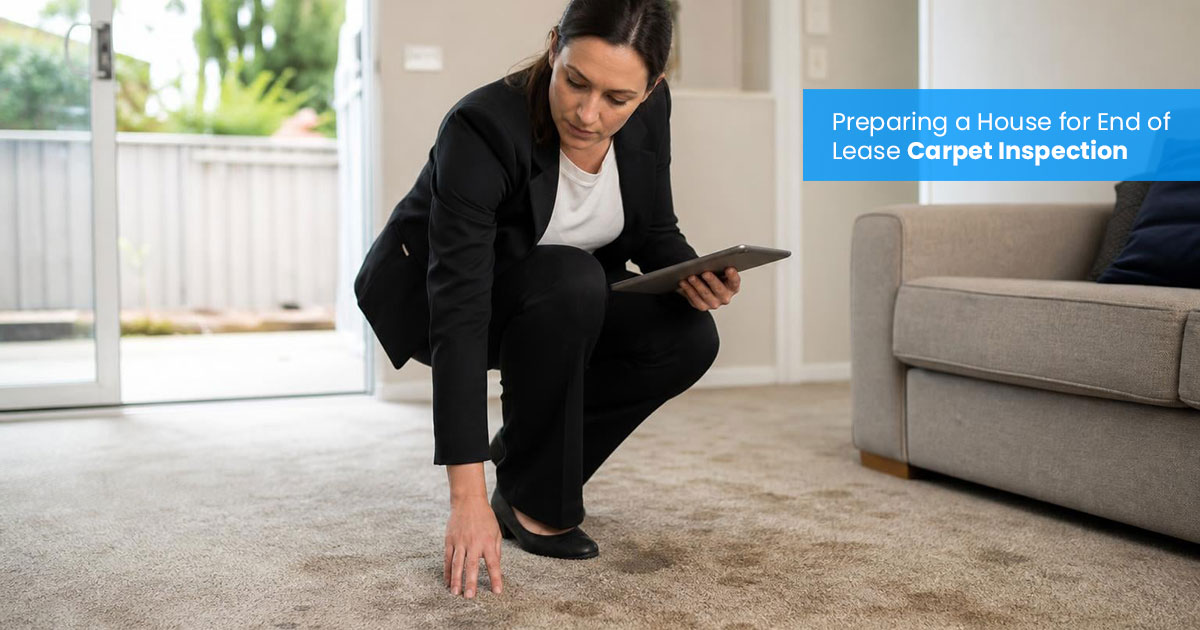
Preparing a House for End of Lease Carpet Inspection (2026)
TL;DR
More than 56% of Queensland bond disputes involve cleaning, and carpet is the single biggest issue. Preparing a house for end of lease carpet inspection means understanding what property managers compare your carpets against (the entry condition report), knowing the difference between fair wear and tear and actual damage, and timing your professional clean correctly. This guide covers every term, process, and QLD-specific rule you need to get your full bond back.
Why Carpet Is the #1 Reason Renters Lose Bond Money
Carpet causes more bond disputes than any other issue in Queensland. According to the RTA’s 2024-25 data, cleaning tops the list of bond claim reasons, ahead of unpaid rent, repairs, water charges, and reletting costs. The RTA conciliated over 23,408 disputes in that period, resolving 77.5% of cases where both parties participated.
That statistic should tell you something: most bond arguments are avoidable. The renters who lose money typically didn’t understand the inspection standard, cleaned too early, skipped documentation, or assumed their DIY effort was enough.
This guide breaks down every term and process you’ll encounter when preparing a house for end of lease carpet inspection in Queensland. Whether you’re renting on the Gold Coast, in Logan, Brisbane, or Tweed Heads, the same RTA rules apply.
If you’re looking for professional help with end of lease cleaning, Joni’s end of lease service covers the Gold Coast and surrounding areas with truck-mounted equipment and transparent pricing.
Inspection Types and Processes You Need to Know
Entry Condition Report
This is the single most important document in any bond dispute. The entry condition report records the state of the property (including carpets) at the start of your tenancy. It typically includes written descriptions and photographs of each room.
In Queensland, tenants have 3 business days after moving in to complete and return the entry condition report. If you didn’t note existing carpet stains, worn areas, or other issues at move-in, proving they were pre-existing becomes much harder at move-out.
Why it matters at the end of your lease: property managers will place your entry condition report side by side with the current state of the carpets. That comparison is the inspection standard. Not “brand new.” Not “perfect.” The same condition as when you moved in, minus fair wear and tear.
Exit Condition Report
The exit condition report documents the property’s condition when you hand back the keys. You should complete this alongside the property manager during or after the final inspection. Take your own photos and videos as well, because this documentation becomes evidence if there’s a dispute.
A common tip from experienced renters on Australian forums: fill out the exit condition report yourself, take timestamped photos of every room after cleaning is done, and keep copies of everything. One practitioner on Whirlpool put it bluntly: “Take photos of the property after the cleaning has been done or when you vacate. Fill and complete the exit condition report.”
Pre-Vacate Inspection
Some property managers offer a pre-vacate inspection a week or two before your lease ends. This is an informal walkthrough where the agent points out anything that won’t pass the final inspection. It’s not mandatory, but it’s genuinely useful.
Think of it as a practice run. If the agent flags carpet stains or heavy soiling during the pre-vacate inspection, you still have time to book a professional clean. Not every agency offers this, so ask your property manager if it’s available.
Final Inspection (End of Lease Inspection)
This is the formal, room-by-room assessment where the property manager compares the property’s current condition against the entry condition report. They check walls, floors, fixtures, appliances, and outdoor areas, but carpets consistently draw the most scrutiny.
During the carpet portion, inspectors typically focus on three things: visible cleanliness (stains, traffic lanes, general soiling), odour (pet smells, smoke, cooking residue), and edge cleanliness (build-up along skirting boards that vacuuming misses). They may also check for “shadowing,” which refers to compressed pile marks where furniture sat.
You have the right to attend the final inspection in person. Do it. Being present lets you address concerns on the spot and ensures nothing gets flagged unfairly.
Carpet Condition Terms Every Renter Should Understand
Fair Wear and Tear
This is the most contested term in end of lease inspections. Under Queensland tenancy law, fair wear and tear means deterioration that happens through normal, everyday use or natural ageing. The RTA provides specific examples: carpet pile flattening in hallways from foot traffic, minor fading from sunlight exposure, and small scuffs consistent with daily living.
What is not fair wear and tear: stains from spills that weren’t cleaned up, burns, pet urine damage, and odours from pets or smoking. In QCAT (Queensland Civil and Administrative Tribunal) cases, baby vomit on carpet was ruled as not constituting fair wear and tear. Pet urine smells in carpet have also been consistently ruled as tenant responsibility.
The distinction matters because you’re not responsible for normal ageing of carpets. If the carpet was already five years old when you moved in and shows typical signs of use after your two-year tenancy, that’s expected. But if you added stains, burns, or pet damage, those are your responsibility.
If pet odour is your concern, understanding how to remove pet urine odour before the inspection can save your bond.
Traffic Lanes (Traffic Lines)
These are the visible pathways of discolouration and compression that form where people walk most frequently, typically hallways, doorways, and the route between the couch and the kitchen. Light traffic lanes are generally considered fair wear and tear for longer tenancies. Heavy, dark traffic lanes that go beyond what’s expected for the length of your lease may be flagged.
Professional hot water extraction can often lift traffic lanes significantly by flushing out the embedded soil that vacuuming can’t reach.
Carpet Shadowing and Furniture Indentations
When heavy furniture sits in one spot for months or years, the carpet pile compresses underneath. These indentations are generally considered fair wear and tear under QLD tenancy law, provided there’s no actual damage (like tears or stains) beneath the furniture.
Professionals sometimes call the visible difference between the compressed area and surrounding carpet “shadowing.” If your entry condition report shows the carpet was in good condition when furniture was already in place, you’re usually fine.
Wicking
This is a term most renters learn about the hard way. Wicking happens when stains reappear after cleaning because residue trapped deep in the carpet backing gets drawn up to the surface as the carpet dries. You clean the carpet, it looks great while wet, then brown or yellow spots return within hours or days.
Wicking is a common problem with DIY carpet cleaning machines and underpowered portable extractors. One widely cited industry example describes a tenant whose DIY machine left detergent residue behind. The carpet looked clean initially, but traffic lanes reappeared after drying, requiring a professional re-clean that doubled the cost and ate into the timeline.
The fix is proper extraction with enough suction power to remove cleaning solution from deep within the carpet, not just the surface. This is one of the main reasons truck-mounted equipment outperforms portable units for end of lease work.
Pile Flattening
Loss of carpet height and texture from sustained foot traffic or furniture weight. This is distinct from staining or soiling. Pile flattening in high-traffic areas is considered fair wear and tear in Queensland, so you shouldn’t be penalised for it at inspection.
Carpet Depreciation
If your property manager claims you’ve damaged the carpet beyond fair wear and tear, they can’t charge you the full cost of replacement. QCAT applies a depreciation model. While Queensland law doesn’t set a fixed carpet lifespan, the tribunal typically uses a 10-year expected useful life.
Here’s how it works: if a carpet is damaged at year 7 of its life, the landlord can recover approximately 30% of the replacement cost (the remaining useful life). If the carpet is already 10 years old, the depreciation claim is effectively zero. This is why knowing the age of the carpet matters, and why your entry condition report (and any notes about existing carpet condition) is so valuable.
Cleaning Methods: What Actually Works for End of Lease
Hot Water Extraction (Steam Cleaning)
This is the standard method for end of lease carpet cleaning across Australia. Despite the name “steam cleaning,” the process actually involves injecting hot water and cleaning solution into carpet fibres under high pressure, then immediately extracting the water along with dissolved dirt, allergens, and residue.
Hot water extraction works because it flushes contaminants out of the carpet rather than scrubbing them deeper in. Truck-mounted machines generate significantly more heat and suction than portable rental units, which translates to deeper cleaning and faster drying times.
For a detailed comparison of methods, the guide on how hot water extraction works covers the technical differences worth understanding before you book.
Dry Carpet Cleaning
A low-moisture chemical cleaning method that uses minimal water. It dries faster than hot water extraction, but it doesn’t penetrate as deeply into carpet fibres. For lightly soiled carpets, dry cleaning may be adequate. For heavily soiled carpets, pet-affected areas, or properties where the lease requires “professionally cleaned” carpets, hot water extraction is the safer choice.
Pre-Treatment (Pre-Spray)
Before extraction begins, professional cleaners apply a chemical pre-spray to break down embedded soil, oils, and stains. This step is especially important for high-traffic areas and kitchens where cooking oils accumulate in carpet fibres. Pre-treatment loosens contaminants so the extraction phase can remove them more completely.
Enzyme Treatment
Biological cleaners that use enzymes to break down organic matter at a molecular level. Standard carpet cleaning won’t eliminate pet urine odour because the uric acid crystals bind to carpet fibres and underlay. Enzyme treatments are specifically designed to digest these organic compounds.
If you’ve had pets during your tenancy, enzyme treatment is often the difference between passing and failing the odour portion of your inspection. For deeper guidance, the pet stain removal glossary explains how different stain types require different treatment approaches.
Re-Soiling
When a cleaned carpet starts attracting dirt again quickly, often within days. This usually happens because detergent residue was left in the fibres, creating a sticky surface that traps new dirt. It’s a common consequence of using rental machines that lack the suction power to fully rinse and extract cleaning solution.
Re-soiling is one of the hidden costs of cheap or DIY cleaning. The carpet looks fine on cleaning day, but by the time the inspection rolls around, it’s already collecting grime again.
QLD Legal Terms That Affect Your Bond
Reasonably Clean
The standard tenants must meet when returning a property. The term isn’t formally defined in the Residential Tenancies and Rooming Accommodation Act 2008 (Qld), which makes it inherently subjective. In practice, it means returning the property to the same level of cleanliness as when you moved in, accounting for fair wear and tear.
There’s no legal requirement in Queensland for carpets to be “professionally cleaned” at end of lease unless specific conditions are met (see Special Terms below). The baseline is: match the entry condition report.
Special Terms (Special Conditions)
Additional clauses written into your tenancy agreement beyond the standard terms. A special term requiring professional carpet cleaning at end of lease can be enforceable in Queensland, but only under specific circumstances.
In 2019, a QCAT appeal case found that where a property had been professionally cleaned and fumigated before the tenancy began, a special term requiring the tenant to do the same at the end was reasonable. The tenant in that case had kept four inside dogs and a budgie.
However, a property manager cannot unilaterally require tenants to purchase specific cleaning services if no such condition exists in the agreement, and the condition must be fair. In March 2018, the RTA successfully prosecuted a property management agency for unlawful conditions requiring tenants to have carpets professionally cleaned. The penalty was $6,000.
The takeaway: read your lease carefully, check whether a carpet cleaning special term exists, and verify whether the carpets were actually professionally cleaned before your tenancy started.
Bond Dispute Process
When you and your property manager can’t agree on the bond refund, the dispute follows a defined pathway in Queensland:
- Form 4 lodgement: Either party submits a bond refund request through the RTA.
- 14-day response window: The other party has 14 days to agree or dispute the claim.
- RTA conciliation: If there’s disagreement, the RTA offers a free conciliation service to help both parties reach resolution.
- QCAT hearing: If conciliation fails, either party can apply to QCAT for a binding decision.
The RTA’s annual report shows the conciliation process works well when both parties engage, with a 77.5% resolution rate for participated disputes.
Supporting Evidence Requirement (2024 Reform)
This is a significant change that strengthens tenant protections. For rental bonds lodged on or after 30 September 2024, property managers must provide supporting evidence to the tenant within 14 days when claiming or disputing a bond refund. Failing to provide evidence is now an offence under Queensland law.
This means your property manager can’t simply say “the carpets aren’t clean enough” and deduct from your bond. They need to show evidence, typically photos comparing entry and exit condition, documented damage, or quotes for remedial work. It also means your own evidence (photos, cleaning receipts, condition reports) is more powerful than ever.
QCAT (Queensland Civil and Administrative Tribunal)
The tribunal that makes binding decisions on unresolved bond disputes. QCAT applies the depreciation model to carpet damage claims, requires evidence from both parties, and considers what’s reasonable given the age of the carpet and length of the tenancy. Hearings are relatively informal compared to a courtroom, but preparation and documentation still determine outcomes.
Practical Preparation: Your Pre-Inspection Checklist
The Self-Audit Walkthrough
Before any professional cleaning happens, do your own room-by-room inspection. Pull out your entry condition report and compare it against what you see now. Note any stains, traffic lanes, odours, or damage that wasn’t documented at move-in.
A UV flashlight (black light) is a useful tool here. Shine it across carpeted areas in a darkened room to reveal hidden pet urine stains that are invisible under normal lighting. Knowing where problem spots are before the cleaner arrives means they can target those areas with appropriate treatments.
Timing Your Professional Clean
Timing is one of the most underappreciated factors when preparing a house for end of lease carpet inspection. Book your carpet cleaning too early and foot traffic from moving furniture and boxes will re-soil the carpet before the inspection.
The ideal window is 24 to 48 hours before your final inspection, after all furniture and belongings have been removed from the property. This gives the carpet time to dry completely while minimising the chance of re-soiling.
On the Gold Coast and across South East Queensland, humidity is a real factor in drying times. Carpet cleaned by a truck-mounted machine typically dries in 4 to 12 hours, but high humidity can extend that. Running air conditioning and ceiling fans during the drying period helps significantly.
What Your Cleaning Receipt Must Include
A proper cleaning receipt is your best insurance against bond disputes. Ask your cleaner to include: your name, the service address, the date of service, which areas were cleaned, the method used (e.g., hot water extraction), any add-on treatments (pet stain treatment, enzyme application, deodorising), the total cost paid, and the cleaner’s business contact details including ABN.
If a property manager disputes your bond claim for carpet cleaning, this receipt is your primary evidence that you fulfilled your obligations. Practitioners on Australian forums consistently emphasise this point: “As long as you pay for professional services and have the receipt, they cannot claim any more from you.”
The Bond-Back Guarantee
Many professional end of lease carpet cleaners offer a bond-back or re-clean guarantee. This means that if the property manager isn’t satisfied with the carpet condition after the initial clean, the cleaner will return and re-clean at no additional charge.
When booking, confirm the specifics. A 72-hour re-clean window is standard. This gives you a safety net if your property manager raises issues during the final inspection. Having this guarantee in writing also sends a signal to your property manager that the work was done professionally.
For Gold Coast, Logan, and surrounding areas, get a transparent quote from a local cleaner who understands what South East Queensland property managers expect.
The Day-by-Day Timeline for Preparing Carpet Before Inspection
7 days before inspection: Do your self-audit walkthrough. Compare carpets against entry condition report. Identify problem areas. Book your professional cleaner if you haven’t already.
3 to 4 days before inspection: Move all furniture and belongings out of the property. This is critical because carpets can’t be properly cleaned with furniture in place, and moving items after cleaning guarantees re-soiling.
1 to 2 days before inspection: Professional carpet cleaning happens now. All rooms empty, all carpets accessible. Make sure the cleaner addresses any specific stains or odour issues you identified during your self-audit.
Same day or day before inspection: After the carpet is dry, do a final walkthrough. Take timestamped photos of every room. Check edges along skirting boards for any remaining build-up. Complete your portion of the exit condition report.
Inspection day: Attend in person. Bring your entry condition report, cleaning receipt, and photos. If the property manager raises concerns, you can address them immediately rather than arguing through paperwork later.
What Happens If You Fail the Carpet Inspection
A failed inspection isn’t the end of the road. If your property manager identifies carpet issues, you typically have a short window to remedy them. This is where a re-clean guarantee from your original cleaner becomes valuable.
If you can’t reach agreement and the property manager claims part of your bond, the process moves to the RTA’s dispute resolution pathway. Remember the 2024 reform: they must provide supporting evidence for any claim within 14 days.
One Queensland property manager on Whirlpool offered a candid perspective: “I have never yet seen a bond clean done right the first time (either privately or professionally). There is always something missed.” That’s not a reason to panic. It’s a reason to be thorough, keep documentation, and have a re-clean arrangement in place.
Multiple experienced renters on the same forum push back against unreasonable cleaning demands. One user shared: “If the carpet is as you found it, tell the PM you will not under any circumstances be paying for steam cleaning. I told them I’d see them in court. Full bond back within 2 days.” While that’s an aggressive approach, it underscores the point that knowing your rights, backed by documentation, puts you in a strong position.
DIY vs. Professional Carpet Cleaning for End of Lease
The temptation to save money with a rental machine is understandable. But for end of lease purposes, DIY carpet cleaning carries real risks.
Portable rental machines produce a fraction of the heat and suction that professional truck-mounted equipment generates. They often leave detergent residue in the carpet, which causes wicking (stains reappearing after drying) and re-soiling (carpet getting dirty again quickly). Both problems can mean paying for a professional clean anyway, on a tighter timeline.
More importantly, a DIY clean produces no professional receipt. If your property manager requires evidence of professional cleaning (either because of a special term in your lease or as part of a dispute), a Bunnings rental receipt won’t carry the same weight.
That said, the QLD legal position is clear: there is no blanket requirement for professional carpet cleaning at end of lease. If your carpets are genuinely in the same condition as when you moved in (minus fair wear and tear), and you can document that, you’re within your rights to return them without professional cleaning. The practical reality, though, is that professional cleaning with proper documentation is the simplest way to prevent disputes.
For a broader look at why professional methods produce better results, the guide on benefits of professional carpet cleaning covers the differences in detail.
Frequently Asked Questions
Is professional carpet cleaning legally required at end of lease in Queensland?
No. The Residential Tenancies and Rooming Accommodation Act 2008 (Qld) does not require professional carpet cleaning. Your obligation is to return the property in the same condition as at the start of the tenancy, minus fair wear and tear. However, if your lease contains a special term requiring professional cleaning, and the carpets were professionally cleaned before your tenancy, that term may be enforceable based on QCAT precedent.
What do property managers actually look for during the carpet inspection?
They compare the current carpet condition against the entry condition report. Specific things they check include visible stains or discolouration, traffic lane severity, odours (especially pet or smoke), edge cleanliness along skirting boards, and any burns, tears, or damage that wasn’t present at move-in.
Can my landlord charge me for carpet replacement?
Only if you caused damage beyond fair wear and tear, and even then, QCAT applies depreciation. If the carpet has a 10-year expected lifespan and the damage occurred at year 7, the landlord can claim roughly 30% of the replacement cost, not the full amount. Carpet that’s already at or past its expected lifespan has minimal or zero claim value.
How soon before the final inspection should I have carpets cleaned?
The ideal timing is 24 to 48 hours before the inspection, after all furniture and belongings are out of the property. Cleaning too early means foot traffic from moving will re-soil the carpet. In humid conditions typical of the Gold Coast and South East Queensland, allow extra drying time and use fans or air conditioning to speed the process.
What is wicking and how do I prevent it?
Wicking is when stains reappear after carpet cleaning because residue in the carpet backing gets drawn to the surface as it dries. It’s most common with DIY machines or portable extractors that lack sufficient suction to remove all cleaning solution. Prevention comes down to using professional equipment with strong extraction power and proper rinsing techniques.
What evidence do I need to protect my bond?
Keep your entry condition report (with photos), your cleaning receipt with full details (date, address, method, areas cleaned, cleaner’s ABN), your own timestamped post-clean photos of every room, and a completed exit condition report. Since the September 2024 reform, your property manager must also provide supporting evidence for any bond claim, which further strengthens the tenant’s position.
Can my property manager deduct bond money without evidence?
For bonds lodged from 30 September 2024 onward, no. Property managers must provide supporting evidence within 14 days when claiming or disputing a bond refund. Failure to provide evidence is an offence under Queensland law. For older bonds, the requirement is less strict, but evidence is still expected if the matter goes to QCAT.
Should I attend the final inspection?
Yes, absolutely. Attending lets you see exactly what the property manager flags, respond to concerns in real time, and ensure the exit condition report is accurate. Many disputes escalate simply because the tenant wasn’t present to provide context or point out that an issue was pre-existing.
Get Your Carpets Inspection-Ready
Preparing a house for end of lease carpet inspection doesn’t need to be stressful. Know your rights under QLD tenancy law, document everything, time your cleaning correctly, and choose a professional cleaner who offers a re-clean guarantee.
For renters across the Gold Coast, Logan, Brisbane, and Tweed Heads, Joni’s end of lease carpet cleaning uses truck-mounted equipment for deep extraction, provides detailed receipts, and offers transparent quotes with no hidden fees. It’s the kind of preparation that makes final inspections straightforward.