
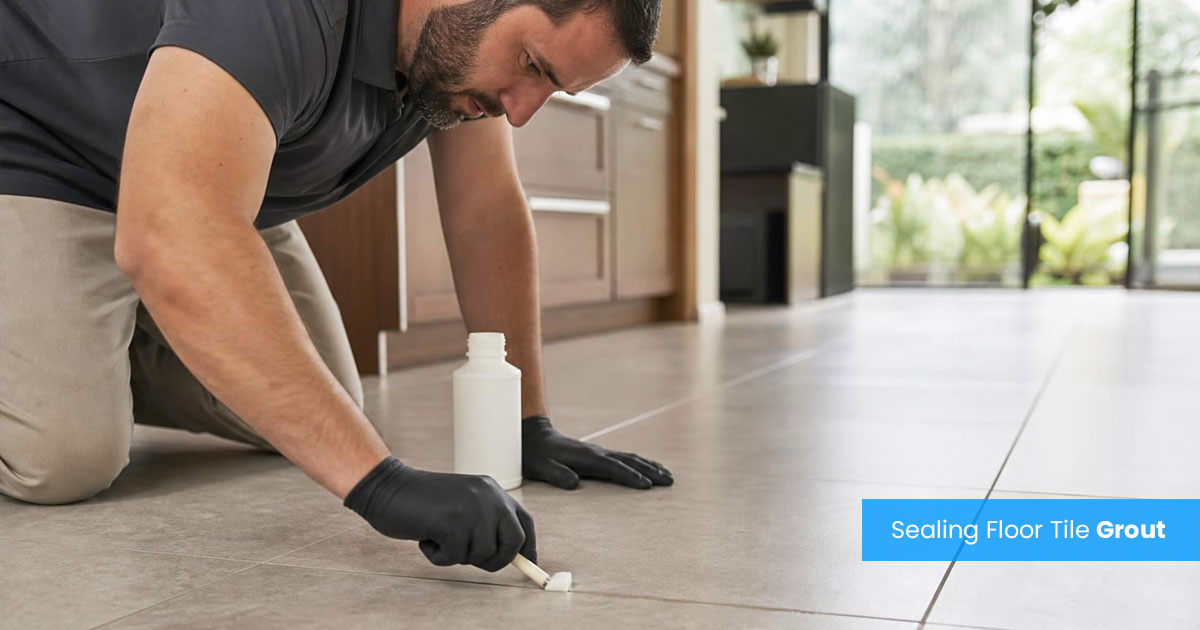
Sealing Floor Tile Grout: 2026 Gold Coast Service Guide
TLDR
Sealing floor tile grout protects the porous cement-based grout lines between your tiles from absorbing dirt, water, grease, and staining material. For the best results, grout must be professionally deep cleaned before sealing. Joni’s Cleaning provides tile and grout cleaning and sealing across the Gold Coast, Logan, Brisbane, and Tweed Heads, using high-temperature, high-pressure equipment that lifts deep grime from grout pores before sealer is applied. Get a free, no-obligation quote with no hidden fees.
Cement-based grout is porous. Without protection, those narrow lines between your tiles act like tiny sponges, soaking up coffee spills, mop water, cooking grease, and anything else that hits the floor. Over months and years, the grout darkens unevenly and becomes harder to clean, no matter how much you mop.
A grout sealer reduces that absorption. Think of it as buying extra reaction time to wipe up a spill before it becomes a permanent stain. That framing comes directly from Aqua Mix’s sealer documentation, and it is the most honest way to describe what sealer does. It does not make grout self-cleaning. It gives you a better window to clean up before damage sets in.
Here is the part most Gold Coast homeowners miss: if your grout is already dark or stained, sealing it now will lock that discoloration in. The first step is always professional cleaning, then sealing. That is exactly what Joni’s Cleaning delivers, a complete clean-and-seal service that restores your grout before protecting it.
Ready to get your grout cleaned and sealed? Request your free quote from Joni’s Cleaning, the price quoted is the price you pay, with no hidden fees.
What Is Sealing Floor Tile Grout?
Sealing floor tile grout is the process of applying a protective sealer to the porous joints between floor tiles so the grout absorbs less water, oil, dirt, and staining material. It is mainly a stain-resistance and maintenance step for cement-based grout.
The Tile Council of North America (TCNA) confirms that cementitious grout is porous and can absorb stains, which is why sealing is generally recommended for this grout type. The sealer penetrates or coats the grout surface, reducing how quickly liquids and contaminants get absorbed into the material.
Most Gold Coast homes have large tiled areas across kitchens, bathrooms, laundries, patios, pool surrounds, and open-plan living spaces. That means a lot of grout lines exposed to daily foot traffic, spills, and humidity. Professional sealing after a thorough deep clean is the most effective way to keep those grout lines looking fresh and protected.
Why Gold Coast Grout Needs Professional Attention
Gold Coast homes face specific conditions that make grout sealing more important, and more difficult to do properly.
Humidity. The subtropical climate means grout is exposed to more moisture year-round. Mould can establish itself in unsealed grout faster than in drier regions.
Large tiled areas. Open-plan living, outdoor entertaining areas, and pool surrounds mean many Gold Coast homes have dozens of square metres of exposed grout.
Sandy, gritty foot traffic. Beach sand tracked through entryways acts as an abrasive, wearing down grout and grinding dirt deeper into porous surfaces.
Hard water. Mineral-heavy water can leave deposits in grout that regular mopping will not shift.
In a r/AusRenovation thread, an Australian homeowner noticed grout absorbing water and changing colour after a bathroom renovation. One commenter said sealing grout is not universally standard in Australia but recommended it for easier cleaning. Another clarified that grout sealers mostly help preserve appearance, while the waterproofing below the tile is what handles water.
These conditions are exactly why professional cleaning and sealing outperforms DIY attempts. Joni’s Cleaning uses truck-mounted equipment with high-temperature and high-pressure cleaning to extract embedded grime from grout pores, something a mop or scrub brush simply cannot replicate. Once the grout is properly clean and dry, a penetrating sealer is applied to protect the results.
What Grout Sealer Actually Does (and What It Does Not)
Grout sealer is not armour. Here is what it realistically accomplishes:
- Reduces absorbency. Sealed grout takes longer to soak up liquids, giving you time to clean spills.
- Improves stain resistance. Coffee, wine, grease, and dirty mop water are less likely to permanently discolour the grout.
- Helps grout stay closer to its original colour. Especially useful in kitchens, entryways, and high-traffic hallways.
- Makes routine cleaning more effective. Soil sits on the surface rather than lodging deep in grout pores.
What it does not do:
- Grout sealer is not waterproofing. In Australian wet areas, the waterproofing system is a membrane behind or below the tile, combined with waterproof sealants at junctions. The National Construction Code makes this clear in its wet-area provisions.
- It will not fix a leaking shower. The QBCC notes that residential bathroom waterproofing claims finalised in 2024-25 averaged almost $25,000 in rectification costs. If your shower leaks, get the leak diagnosed first.
- It will not repair cracked, loose, or crumbling grout.
- It will not fix stained grout. Sealer locks in whatever is already there, which is why deep cleaning must come first.
Practitioners on Reddit consistently reinforce this point. In a r/BathroomRemodeling thread, one commenter explained that the waterproofing comes from the system under the tiles, while another in r/HomeImprovement stated that sealing grout is mainly to keep it clean.
Should You Seal Your Floor Tile Grout?
|
Situation |
Seal it? |
Why |
|---|---|---|
|
Cement-based grout on kitchen, bathroom, laundry, or high-traffic floor |
Usually yes |
Cement grout is porous and absorbs stains |
|
Epoxy grout |
Usually no |
Very low absorption, typically under 0.5% |
|
High-performance cement grout |
Check the product data sheet |
Some modern products do not require sealing |
|
Glazed porcelain or ceramic tile surface |
Usually no |
Low porosity, already stain resistant |
|
Grout around natural stone |
Often yes |
Both stone and grout may be porous |
|
Cracked or missing grout |
No, repair first |
Sealer will not restore failed grout |
|
Dirty or darkened grout |
Clean first, then seal |
Sealing locks in the soil |
LATICRETE confirms that its epoxy grouts have absorption rates below 0.5% and do not require sealing. MAPEI notes that glazed ceramic and porcelain tiles have almost no porosity, so sealing is not required for those tile surfaces, only for porous materials like natural stone, terracotta, and cement-based grout.
Not sure what type of grout you have? Joni’s Cleaning can assess your floors during a free quote visit and recommend the right approach. Arrange a quote or demo.
Do You Seal the Tile, the Grout, or Both?
This is one of the most common points of confusion.
For most glazed porcelain and ceramic floor tiles, you seal the grout lines only. The tile surface is already non-porous and does not absorb sealer. Applying sealer across the tile face and letting it dry creates a sticky residue that attracts dirt. A practitioner on r/Tile advised against applying sealer to porcelain because non-porous tile will not absorb it and the residue becomes a problem.
For natural stone floors (marble, travertine, limestone, slate), both the tile and the grout may need sealing because the stone itself is porous.
The TCNA states that for glazed floor tile, it is not a good idea to spray anything on the tile because the glaze is easier to clean and longer lasting than a coating.
This is one reason professional application matters. Joni’s technicians apply sealer precisely to grout lines using appropriate tools, avoiding the tile surface entirely and preventing the residue problems that plague DIY attempts.
Types of Grout Sealers
The two main categories are penetrating and topical, and the difference matters for durability, appearance, and maintenance.
|
Sealer type |
How it works |
Best for |
Drawbacks |
|---|---|---|---|
|
Penetrating (impregnating) |
Absorbs into the grout and bonds internally |
Cement grout, porous stone |
Does not change texture or appearance much; premium options cost more |
|
Topical |
Coats the surface with a film |
Some porous surfaces where a coating is wanted |
Wears under foot traffic, can look plastic, may need stripping |
|
Enhancing (wet-look) |
Deepens colour and adds sheen |
Stone or grout where a richer tone is desired |
Changes appearance permanently |
|
Colour sealer |
Adds pigment to recolour and seal simultaneously |
Stained or uneven grout |
More specialist process, not a DIY starter project |
The TCNA explains that penetrating sealers are generally more durable but more expensive than topical options. Topical sealers can give grout a plastic appearance and are subject to wear from foot traffic, making them less practical for busy kitchen or hallway floors.
For most Gold Coast homes, a penetrating sealer is the right choice. It will not change the grout’s look, will not create a slippery film, and will not need stripping when it wears off.
Why Cleaning Must Come Before Sealing
This is the step that separates a professional result from a wasted effort.
Sealer should only go on grout that is clean, dry, and sound. If the grout is dark from years of mopping with dirty water, greasy from kitchen spills, or spotted with mould and soap film, applying sealer will preserve that contamination. You end up with sealed-in dirt that looks just as bad but is now harder to remove.
The TCNA recommends applying cleaner, then vacuuming up the dirty water, rinsing, and vacuuming again. This extraction method pulls soil and soap residue out of the grout joint rather than spreading it around. A grout restoration practitioner on r/Tile described using hot water pressure extraction and steam combined with vacuum extraction as the key to pulling embedded soil from porous grout before sealing.
This is precisely the process Joni’s Cleaning uses. Their truck-mounted equipment delivers high-temperature, high-pressure cleaning with pretreatments designed to lift deep grime from grout pores. The cleaning itself often makes the biggest visual difference, and it gives the sealer a proper surface to bond with.
Your grout cleaned and sealed by professionals who know Gold Coast tile. Get a free quote from Joni’s Cleaning, no hidden fees, ever.
Why Professional Grout Sealing Beats DIY
|
DIY approach |
Professional service from Joni’s Cleaning |
|---|---|
|
Limited to store-bought sealers and hand tools |
Commercial-grade sealers applied with precision equipment |
|
Cleaning with mop and brush pushes dirt around |
Truck-mounted high-pressure, high-temperature extraction lifts embedded grime |
|
Risk of sealer residue on tile faces |
Technicians trained to apply sealer to grout lines only |
|
Time-consuming on large tiled areas |
Efficient service across whole-home tiled floors |
|
No way to assess grout condition or type |
Professional assessment identifies grout type, damage, and correct treatment |
|
Multiple weekends of work |
Completed in a single visit |
The TCNA notes that stubborn stains, efflorescence, and acid-related damage may be best handled by experienced professionals. EuroSeal also points out that stripping old topical sealers can be difficult and time-consuming, generally requiring professional tile cleaning equipment.
For readers planning a whole-home refresh (not just the tile floors), you can coordinate tile, carpet, and air-conditioner cleaning in one visit rather than scheduling separate appointments. That is one of the advantages of working with Joni’s Cleaning: carpet steam cleaning, tile and grout work, upholstery cleaning, and air conditioner cleaning all handled by the same team in a single booking.
Common Mistakes Homeowners Make with Grout Sealing
These problems come up repeatedly in practitioner forums and manufacturer warnings:
- Sealing dirty grout. Locks in soil, grease, soap film, or mould. This is the most common mistake.
- Sealing the porcelain tile face. Non-porous tiles will not absorb the sealer. The residue just sits on top and attracts dirt.
- Letting sealer dry on the tile. Causes haze or a white film that is difficult to remove.
- Sealing damp grout. Traps moisture and prevents proper sealer adhesion, a real concern in Gold Coast humidity.
- Using acidic cleaners on cement grout. The TCNA warns that acids can dissolve the cement component of grout, sometimes leading to the need for regrouting. Vinegar is a common culprit.
- Expecting clear sealer to fix uneven colour. Clear sealer preserves the current appearance. If the colour is patchy, you may need colour sealing or regrouting instead.
- Treating grout sealer as waterproofing. It improves surface stain resistance. It does not stop water from reaching the substrate.
- Applying new sealer over old topical coating without stripping. New sealer will not bond properly on top of worn or peeling coatings.
Every one of these mistakes is avoided when you use a professional service. Joni’s Cleaning assesses your grout condition, cleans thoroughly, ensures proper drying, and applies sealer correctly.
How Often Should Grout Be Resealed?
Product-specific claims range from up to 5 years for standard grout sealers to up to 15 years for premium penetrating sealers. Those numbers depend on traffic, cleaning chemicals, moisture exposure, and how well the original application was done.
Use the water-drop test periodically to check. Drop a few beads of water onto clean, dry grout. If the water sits on the surface and the grout does not darken, the sealer is likely still working. If water absorbs quickly and the grout darkens, it may be time to reseal.
A grout restoration practitioner on r/Tile described this water-darkening test as a practical indicator that the sealer has broken down.
In high-traffic kitchens, rental properties, and commercial spaces, you will likely need to reseal more frequently. Property managers handling multiple rental turnovers should consider scheduling regular cleaning and resealing to protect their investment. For more on keeping tile floors in better shape over time, see this guide on tile and grout cleaning for homes and businesses.
The Three Checks Before Sealing
Before sealing floor tile grout, three things need to be confirmed:
1. Grout type. Cement grout often benefits from sealing. Epoxy grout usually does not. High-performance grout may have its own recommendations.
2. Tile type. Glazed porcelain and ceramic tile surfaces do not need sealer. Natural stone often does. When in doubt, a professional assessment takes the guesswork out.
3. Problem type. If the issue is dirt or stains, sealing will help after cleaning. If the issue is cracks, leaks, mould from hidden moisture, or efflorescence, investigate repair or waterproofing before reaching for a sealer.
A useful principle: grout sealing is maintenance, regrouting is repair, and waterproofing is the protection behind the tile. Getting these confused leads to wasted money and unresolved problems.
Joni’s Cleaning: Tile and Grout Cleaning & Sealing Across the Gold Coast
Joni’s Cleaning provides complete tile and grout cleaning and sealing for homeowners, property managers, and businesses across the Gold Coast and surrounding regions.
What the service includes:
- Assessment of your grout type and tile condition
- High-temperature, high-pressure cleaning with pretreatments to lift deep grime and mould from grout pores
- Truck-mounted extraction equipment for thorough soil removal
- Application of penetrating grout sealer to clean, dry grout lines
- Visibly brighter surfaces with long-lasting protection
Service areas: Southport, Robina, Helensvale, Burleigh Heads, Pacific Pines, Upper Coomera, Coomera, Pimpama, Ormeau, Labrador, Nerang, Gaven, Highland Park, Gilston, Molendinar, and across Gold Coast, Logan, Brisbane, and Tweed Heads.
Why homeowners and property managers choose Joni’s:
- Transparent pricing. The price quoted is the price you pay. No hidden fees, no surprise add-ons.
- 5+ years of experience with 4.9 stars from 175+ Google reviews
- One-stop service. Combine tile and grout work with carpet steam cleaning, upholstery cleaning, air conditioner cleaning, or pest control in a single visit.
- Free demo available. Not sure if professional cleaning will make a difference? Joni’s can arrange a demo on a small area so you can see the results before committing.
- Direct contact. Call or text on 0479 045 067 for a fast response.
Get your free, no-obligation quote for tile and grout cleaning and sealing
Frequently Asked Questions
Is sealing floor tile grout worth it?
Usually yes for cement-based grout in kitchens, bathrooms, laundries, and high-traffic areas, provided the grout is properly cleaned first. The cost of professional cleaning and sealing is modest compared to regrouting, which makes it a sensible maintenance step for most Gold Coast tiled floors.
Does porcelain tile grout need sealing?
The porcelain tile itself usually does not need sealing because it has very low porosity. But the cement-based grout between porcelain tiles often benefits from sealing. A professional service applies sealer to the grout lines only, avoiding residue problems on the tile face.
Can grout sealer stop a leaking shower?
No. Grout sealer may reduce surface absorption, but wet-area waterproofing depends on membranes, sealants at junctions, and the system behind the tile. If your shower is leaking, get the leak properly diagnosed before spending money on sealer.
How long does grout sealing take?
For most Gold Coast homes, professional tile and grout cleaning and sealing can be completed in a single visit. The exact time depends on the size of the area and condition of the grout. Contact Joni’s Cleaning for a quote tailored to your home.
How much does professional grout sealing cost on the Gold Coast?
Joni’s Cleaning provides custom quotes based on the size of the area, condition of the grout, and specific needs of the job. The price quoted is the price you pay, with no hidden fees. Request a free quote or call 0479 045 067.
Will grout sealer change the colour of my grout?
Penetrating sealers with a natural-look finish generally do not change grout colour once dry, though they can temporarily darken grout while wet. One r/Tile user reported that 511 sealer darkened light grout noticeably, but the original colour returned after about 24 hours of drying. Enhancing or wet-look sealers will intentionally darken the colour. Joni’s technicians can advise on the right sealer type for your floors.
Should grout be cleaned before sealing?
Always. Sealer goes on clean, dry, sound grout. If the grout is already dark, greasy, or mouldy, sealing it will preserve those problems rather than solve them. That is why Joni’s Cleaning always deep cleans grout before applying sealer, it is the only way to get a result worth protecting.
Can I use vinegar to clean grout before sealing?
Avoid it. Vinegar is acidic, and the TCNA warns that acids can dissolve the cement component of grout. Repeated use can erode the grout surface, sometimes badly enough to require regrouting. Professional cleaning with appropriate pH-neutral or alkaline products is the safer approach.
How do I know if my grout needs sealing?
Use the water-drop test. Place a few drops of water on clean, dry grout. If the water beads on the surface and the grout colour does not change, it is likely still sealed. If water absorbs quickly and the grout darkens, the sealer is worn or absent. Or simply book a free assessment with Joni’s Cleaning and they will check for you.
Do you service my area?
Joni’s Cleaning covers the Gold Coast, Logan, Brisbane, Tweed Heads, and Springfield. Specific suburbs include Southport, Robina, Helensvale, Burleigh Heads, Pacific Pines, Upper Coomera, Coomera, Pimpama, Ormeau, Labrador, Nerang, and many more. Check availability and get a quote.