
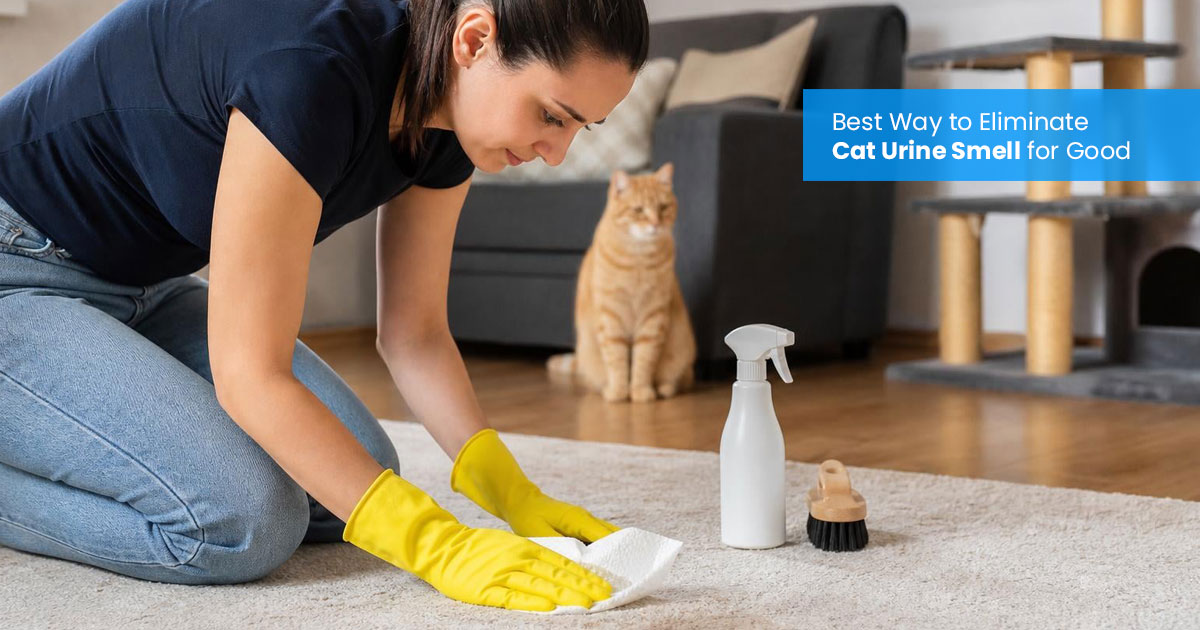
Best Way to Eliminate Cat Urine Smell for Good (2026)
TL;DR
The best way to eliminate cat urine smell permanently is to break down uric acid crystals using enzymatic cleaners, not just mask the odour with vinegar or baking soda. Fresh stains need immediate blotting followed by generous enzyme cleaner application with proper dwell time. For older or deep-set stains, especially in carpet, professional hot water extraction after enzymatic pre-treatment is often the only method that reaches urine trapped in the backing, underlay, and subfloor. On the Gold Coast, subtropical humidity makes the problem worse by constantly reactivating dormant uric acid crystals.
Why Cat Urine Smell Is So Hard to Get Rid Of
You cleaned the spot. It smelled fine for a day or two. Then the smell came back, sometimes worse than before. This is not your imagination, and it is not a failure of effort. The chemistry of cat urine is specifically designed (by evolution, not malice) to persist.
Most cleaning guides skip past the science too quickly, which is exactly why people end up trying method after method without success. Understanding what you’re actually fighting is the first step toward winning.
If you’re dealing with urine odour specifically in carpet, our cat urine smell removal guide walks through the carpet-specific process in detail.
Understanding Cat Urine Chemistry
Uric Acid: The Real Culprit
Uric acid is the compound that makes cat urine fundamentally different from most biological stains. It forms hard, crystalline structures that are highly insoluble in water and resistant to most household cleaning agents. These crystals bind tightly to surfaces and can remain dormant for months or even years.
Here’s the critical part: when humidity rises or the area gets damp again, those crystals absorb moisture and release the trapped odours all over again. This reactivation cycle is why the smell “comes back” after cleaning. You didn’t fail to clean it. You cleaned everything except the uric acid.
For Gold Coast and South East Queensland residents, this matters more than it does almost anywhere else in Australia. The subtropical climate delivers average humidity of 60 to 70 percent year-round, climbing higher in summer. That persistent moisture means uric acid crystals reactivate more frequently and more intensely than they would in drier parts of the country. No competing cleaning guide mentions this, but it is one of the biggest reasons cat urine problems feel insurmountable in coastal Queensland.
Mercaptans and Thiols: Why the Smell Gets Worse Over Time
As cat urine ages, it decomposes into mercaptans, which are sulphur-based organic compounds. These are the same type of compounds found in skunk spray. According to a BISSELL chemist, pet urine contains uric acid that decomposes into mercaptans and ammonia compounds, both of which are extremely pungent to the human nose.
This is why a spot that was barely noticeable last week can become unbearable this week. The urine is literally getting worse as bacteria continue to break it down.
Urea and Ammonia Formation
Urea is the component of cat urine that bacteria break down first, producing that sharp ammonia odour. This is the part that regular cleaners can actually handle. The problem is that most people stop here, thinking the job is done because the ammonia smell has faded. Meanwhile, uric acid crystals and mercaptans remain untouched below the surface.
Worth noting: pet urine is more concentrated than human urine because cats typically drink less water relative to their body weight. Unneutered male cats produce an even more powerful odour due to the hormones they eliminate through urination.
Urochrome: The Staining Agent
Urochrome is the pigment responsible for the yellow colour of urine. It causes visible staining on light-coloured surfaces and fabrics. While urochrome is easier to address than uric acid, it can permanently discolour materials like hardwood and light carpet if left untreated.
How to Detect Cat Urine You Can’t See
Black Light (UV Light) Detection
A UV flashlight is one of the most useful tools for finding the full extent of a urine problem. Cat urine glows under UV light due to the phosphorus it contains, making invisible dried deposits easy to spot.
To use one effectively, scan your home in complete darkness with the UV flashlight held one to three feet from surfaces. Move slowly across carpets, furniture, baseboards, and walls while viewing from a slight angle. Cat urine typically appears as yellow, green, or pale white glowing spots.
A few important details that most guides leave out:
Wavelength matters. Look for a UV flashlight in the 365 to 395nm range. Party black lights are not designed for inspection and produce weaker ultraviolet output with poor optical filtering. A proper UV inspection flashlight costs around $15 to $30 and is worth every cent.
Check the back of carpets too. The upper surface is exposed to air, so old stains may not glow visibly from above. But on the carpet backing, which is rarely exposed, even old stains show up clearly. If you can pull back a corner of carpet, do it.
Watch for false positives. Some laundry detergents and cleaning products also glow under UV light. If a glowing spot doesn’t correspond with a smell or a known accident zone, it may not be urine.
Re-marking Behaviour: The Hidden Cost of Incomplete Cleaning
Re-marking is a cat’s instinct to urinate repeatedly in spots where it can still detect old urine scent, even at concentration levels far below what humans can smell. This creates a vicious cycle: the cat marks, you clean, some uric acid remains, the cat smells it and marks again, the contamination deepens.
This is the real cost of incomplete cleaning. It is not just a lingering smell. It is an ongoing behavioural loop that drives the problem deeper into your carpet, underlay, and subfloor with every repetition. As one pet behaviour resource puts it, if even a trace of urine odour remains, it serves as a signal to the cat that this is a designated spot for marking.
Breaking this cycle requires eliminating the odour completely, not just to the point where you cannot smell it, but to the point where your cat cannot smell it either. That threshold is significantly higher.
The Best Way to Eliminate Cat Urine Smell: Methods Ranked
Tier 1: Immediate Response (Fresh Accidents)
If the urine is still wet, you have a significant advantage. Act within minutes.
Blot, never rub. Press firmly with absorbent paper towels or a clean cloth to pull as much liquid as possible out of the surface. Rubbing spreads the urine laterally and pushes it deeper into fibres.
Use cold water, not hot. Heat can set the proteins in urine, making them harder to remove later. Rinse with cold water and blot again.
Don’t stop at blotting. Even a perfectly blotted fresh stain still contains uric acid. Proceed immediately to enzymatic cleaner application.
Tier 2: Enzymatic Cleaner Application
Enzymatic cleaners are the only category of cleaning product proven to permanently eliminate cat urine odour at its source. They contain biological enzymes (protease, lipase, and amylase) that break uric acid into carbon dioxide and ammonia gas, both of which evaporate harmlessly.
How to use them properly:
- Apply the enzyme cleaner generously. Surface spraying is not enough. The cleaner must reach the same depth the urine penetrated. For carpet, this means saturating through to the backing and padding.
- Allow adequate dwell time. The enzymes only work while they are wet and in direct contact with organic matter. For fresh stains, a minimum of 15 minutes is needed. For older or deeper stains, 24 hours or more may be required.
- Do not use a fan to dry the area. Let it air dry naturally so the enzymes have time to work.
- Expect to repeat the process one to three times for full effectiveness.
Practitioners on Reddit’s r/CatAdvice community (which currently ranks number one in Google for cat urine smell queries) consistently report that enzyme cleaners only work when the area is completely saturated and given long dwell times. Multiple users describe needing to soak carpet to the point where the cleaner reaches the pad underneath. The consensus is clear: half-measures always fail.
For a detailed walkthrough of safe application methods, see our guide on removing pet urine odour from carpet.
Key Enzyme Types
Protease breaks down protein-based components of urine. Lipase targets fat-based molecules. Amylase handles starch-based compounds. A quality enzymatic cleaner contains all three to cover the full spectrum of urine chemistry.
Dwell Time: Why It Matters
Dwell time is the period an enzymatic cleaner must remain wet on a surface to fully break down uric acid. It is arguably the most underappreciated factor in urine odour removal. Spray-and-wipe application fails because the enzymes simply don’t have enough contact time to finish the job. Think of it less like cleaning a counter and more like marinating. The chemistry needs time.
Tier 3: DIY Supplementary Methods
These methods have their place, but none of them can break down uric acid on their own. They work best as supporting steps after enzymatic treatment.
Baking soda is useful as a surface deodoriser after enzymatic cleaning. Sprinkle it over the treated area once dry, leave for several hours, and vacuum up. On its own, it cannot diminish urine odours embedded in carpet or fabric.
White vinegar (diluted 1:1 with water) is an acid that neutralises the alkaline salts in dried urine. It works reasonably well on hard surfaces like tile and sealed floors. Its effectiveness on carpet is limited because it cannot reach deep contamination.
Hydrogen peroxide with dish soap (the common DIY recipe) can address surface-level staining and residual odour. It is a supplementary step, not a standalone uric acid solution. Always spot-test on an inconspicuous area first, as hydrogen peroxide can bleach some fabrics and carpets.
A critical mistake to avoid: do not mix vinegar and baking soda together before applying them. Their acidic and alkaline properties cancel each other out, producing nothing more effective than slightly salty water.
The Two-Stage Approach Most Guides Miss
Cat behaviourist resources recommend a two-stage cleaning sequence that very few mainstream guides mention. First, use an enzymatic cleaner to break down the uric acid. Then, follow up with an oxidising (oxygen-based) cleaner to knock out any last bit of lingering surface odour. This enzyme-then-oxy approach is more effective than using either product alone, and it is a technique used by professional cleaners who deal with pet urine daily.
Tier 4: Professional Carpet Cleaning
When DIY methods have been attempted and the smell persists, the problem has almost certainly penetrated beyond the carpet surface into the backing, underlay, or subfloor. At this point, professional carpet cleaning is the most effective next step.
Hot Water Extraction (Steam Cleaning)
Hot water extraction is a professional carpet cleaning method that injects high-temperature water deep into carpet fibres and extracts it with powerful suction. For urine removal, this method is essential because it flushes out contamination from the carpet backing and underlay that no surface treatment can reach.
The correct sequence matters: enzymatic pre-treatment first (to break down uric acid), then hot water extraction (to flush out the broken-down residue). Using heat before enzymatic treatment can set the stain. This distinction trips up many people. When cleaning guides warn “don’t use steam cleaners,” they are referring to applying heat before treatment, not to professional extraction as a final step.
Truck-Mounted vs. Portable Extraction
For urine removal specifically, truck-mounted extraction equipment has a meaningful advantage. It generates significantly higher water temperatures, stronger suction, and greater flush volume than portable or rental units. This matters because urine that has soaked through carpet into the backing and underlay requires serious extraction power to remove.
Portable units and DIY rental machines simply cannot match the depth of extraction needed for established urine contamination. If you’re weighing the options, our comparison of truck-mounted vs portable extraction explains the practical differences.
Tier 5: Structural Remediation (Severe Cases)
In cases of repeated marking over months or years, urine can soak through carpet and padding into the structural subfloor. At this point, cleaning alone may not be enough.
Carpet underlay (padding) replacement is often necessary because the foam or rubber layer beneath carpet readily absorbs urine and holds it permanently. Unless the underlay has a moisture barrier, it typically needs to come out.
Subfloor treatment and odour encapsulation addresses contamination in concrete or timber subfloors. After enzymatic cleaning of the subfloor, a specialised sealant is applied that acts as an encapsulation barrier, permanently locking in any residual odour molecules.
How severe can it get? In one documented case, a property failed to sell due to lingering odour. The flooring had already been replaced, but the odour returned within days. Inspection revealed cat urine in the subfloor and lower drywall. After full structural treatment, the home sold within two weeks. That is not an unusual story in the professional cleaning industry.
Professional carpet cleaners are upfront about this: solutions are more successful with recent, wet spots rather than areas that have been used repeatedly as a cat bathroom. For those heavily contaminated zones, full restoration (pad replacement, subfloor treatment, encapsulation) is often the honest answer.
Surface-Specific Guide to Eliminating Cat Urine Smell
Carpet
The most complex surface to treat. Urine penetrates through the carpet face, into the backing, through the underlay, and potentially into the subfloor. Enzymatic cleaner must be applied generously enough to reach all affected layers. Professional extraction is often needed for anything beyond a single fresh accident.
Tile and Grout
The tile surface itself is non-porous and usually wipes clean easily with vinegar and water. Grout is the problem. It is porous and can trap uric acid deep within its structure. For grout contamination, enzymatic cleaner applied directly into grout lines (with adequate dwell time) or professional tile and grout cleaning is required.
Upholstery and Furniture
Cat urine on upholstery presents a unique challenge because fabric and cushioning are highly absorbent. Unlike hard surfaces, upholstery traps urine deep within multiple layers, making odours extremely persistent. Enzymatic cleaner must be worked into the fabric and the cushion fill beneath.
For furniture-specific advice, our guide on cat urine smell on furniture covers techniques for different upholstery types. In stubborn cases, professional upholstery cleaning with extraction equipment is the most reliable path to full odour elimination.
Mattress
Mattresses may require several applications of enzymatic cleaner to fully remove cat urine. Apply the cleaner, allow proper dwell time, and blot up excess moisture. Air dry only. Never use heat on a urine-affected mattress, as it can set proteins and worsen the odour. For detailed guidance, see our mattress urine smell removal guide.
Hardwood Floors
Cat urine can discolour hardwood, and once it penetrates the finish, the wood underneath may need to be sanded and refinished. Enzymatic cleaner should be applied quickly to sealed hardwood and wiped up promptly. For unfinished or damaged timber where urine has soaked in, refinishing or board replacement may be the only permanent solution.
Concrete and Subfloor
The porosity of concrete makes it one of the most difficult surfaces to deodourise. Enzymatic cleaner is a necessity here, applied generously and given extended dwell time (24 to 48 hours is common). After enzymatic treatment, sealing the concrete with an odour-blocking encapsulant is essential to prevent any residual odour from escaping.
Common Mistakes That Keep the Smell Coming Back
Using ammonia-based cleaners. Ammonia is a component of cat urine. As Dr. Bruce Kornreich of the Cornell Feline Health Center explains, if cats smell ammonia, they’re more likely to urinate in that spot again. Ammonia-based cleaners can also chemically set the stain.
Applying heat before enzymatic treatment. Steam, hot water, or heat from a hair dryer can bond urine proteins to fibres, making them far harder to remove. Heat should only come into play during professional hot water extraction after enzymatic pre-treatment has broken down the uric acid.
Not using enough product. This is the single most common failure point. The enzymatic cleaner must be applied liberally enough to fully saturate the contaminated area to a depth equal to the original urine penetration. The enzymes only work when wet and in direct contact with the organic matter. A light surface spray on carpet does nothing for urine that has soaked through to the underlay.
Drying the area too quickly. Turning on a fan or opening windows to speed drying cuts the enzymatic reaction short. Let the treated area remain damp and undisturbed for the recommended dwell time.
Only treating the visible stain. Urine almost always spreads wider below the surface than above. A spot the size of a saucer on top of the carpet may be the size of a dinner plate at the backing level. UV light detection helps identify the true extent.
Combining vinegar and baking soda simultaneously. This is one of the most commonly repeated cleaning “hacks” online, and it wastes your time. Their acidic and alkaline properties neutralise each other on contact.
When to Call a Professional
Clear escalation thresholds help you make the right decision:
Single fresh accident on carpet: DIY enzymatic cleaner, applied correctly, will usually resolve this.
Multiple accidents in the same spot or stains older than a few weeks: The re-marking cycle has likely driven urine deep into the carpet backing and underlay. Professional extraction with enzymatic pre-treatment is the appropriate response.
Visible discolouration on carpet backing, persistent odour after multiple DIY treatments, or any sign of subfloor dampness: This indicates subfloor contamination. Padding replacement, subfloor treatment, and possibly odour encapsulation are needed. This is firmly professional territory.
On the Gold Coast, the humidity factor compounds every stage of this problem. Uric acid crystals reactivate more aggressively, re-marking cycles escalate faster, and subfloor contamination develops more readily in a subtropical climate. Getting ahead of the problem with professional treatment early often saves significant time and cost compared to repeated DIY attempts.
Dealing with persistent cat urine odour in your home? Get in touch with Joni’s Cleaning for a quote on professional carpet cleaning using truck-mounted extraction equipment across the Gold Coast, Logan, Brisbane, and Tweed Heads.
Frequently Asked Questions
Does vinegar actually remove cat urine smell?
Vinegar can neutralise some of the alkaline salts in dried cat urine and works reasonably well on hard surfaces like tile or sealed floors. However, it cannot break down uric acid crystals, which are the primary source of persistent odour. On carpet, vinegar’s effectiveness is limited because it cannot penetrate to the depth where most of the contamination sits. Use it as a supplementary step, not a primary treatment.
How long should I leave enzymatic cleaner on cat urine?
For fresh stains, a minimum of 15 minutes is needed, though longer is better. For older stains or carpet where urine has penetrated to the backing and underlay, 24 hours or more of dwell time may be required. The key rule is that the enzymes must remain wet and in direct contact with the organic matter for the entire duration. Do not speed up drying with fans or heat.
Why does cat urine smell come back after I clean it?
The smell returns because uric acid crystals remain embedded in the surface after conventional cleaning. These crystals are insoluble in water and resistant to soap, vinegar, and most household cleaners. When humidity rises or the area gets damp again, the crystals absorb moisture and release trapped odours. This is especially problematic in humid climates like the Gold Coast, where reactivation happens more frequently.
Can baking soda remove cat urine odour from carpet?
On its own, no. Baking soda works as a surface deodoriser and can absorb some ambient smell, but it cannot reach or break down uric acid crystals embedded in carpet fibres, backing, or underlay. It is best used after enzymatic cleaning as a final freshening step, not as a standalone solution.
How can I find old cat urine stains I can’t see?
Use a UV flashlight (365 to 395nm wavelength) in complete darkness, held one to three feet from surfaces. Cat urine glows yellow, green, or pale white under UV light. Move slowly and check baseboards, walls, and furniture legs in addition to floors. For carpet, try to inspect the backing side as well, where even very old stains remain visible under UV.
Is professional carpet cleaning necessary for cat urine, or can I handle it myself?
It depends on severity. A single fresh accident on carpet can usually be resolved with a properly applied enzymatic cleaner. Repeated accidents in the same area, stains that have dried over weeks or months, or any situation where you’ve tried enzymatic cleaner multiple times without success, these indicate that urine has penetrated beyond what surface treatment can reach. Professional hot water extraction with enzymatic pre-treatment is the most reliable method for these deeper contamination scenarios.
Why shouldn’t I use bleach or ammonia-based cleaners on cat urine?
Ammonia is a natural component of cat urine. Using ammonia-based cleaners essentially signals to your cat that the spot is an appropriate toilet area, encouraging re-marking. Bleach and ammonia can also chemically set the stain, bonding it more firmly to the surface. Enzymatic cleaners are the correct choice because they break down the odour source rather than masking or setting it.
How is the Gold Coast climate related to cat urine smell problems?
The Gold Coast’s subtropical humidity (averaging 60 to 70 percent year-round and higher in summer) constantly reactivates dormant uric acid crystals in carpets, upholstery, and subfloors. In drier climates, these crystals may remain dormant for longer periods between reactivations. In South East Queensland, the moisture cycle is nearly continuous, which means untreated urine contamination produces odour more persistently and more intensely than it would elsewhere. This makes prompt, thorough treatment especially important for Gold Coast residents.