
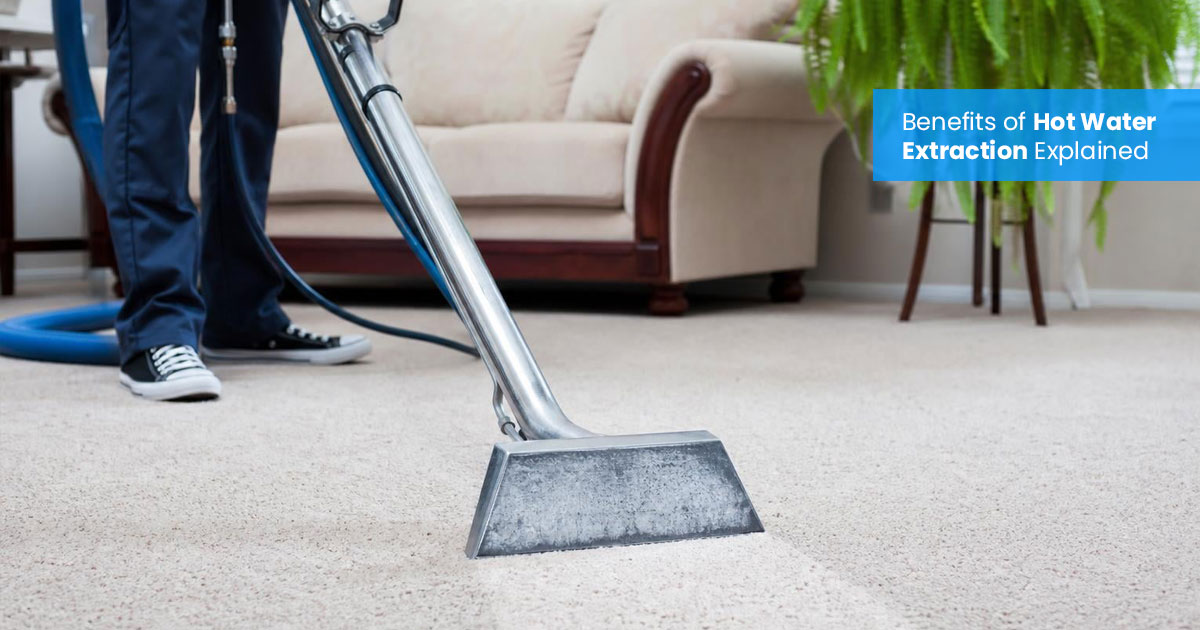
Benefits of Hot Water Extraction Explained (2026 Guide)
TL;DR
Hot water extraction (HWE) is the professional carpet cleaning method that injects heated water at 65–82°C under high pressure into carpet fibres, then immediately vacuums it back out along with dissolved dirt, allergens, and bacteria. It removes over 90% of embedded contaminants, leaves no sticky residue, and is the method required by major carpet manufacturers like Shaw, Mohawk, and Stainmaster to maintain warranty coverage. When performed with truck-mounted equipment, carpets typically dry in 4–6 hours, not overnight as many people assume.
Hot water extraction is what professional carpet cleaning actually means. If you’ve ever hired a carpet cleaner or searched for “steam cleaning,” you’ve almost certainly encountered this method, even if you didn’t know the correct name for it. Understanding the benefits of hot water extraction explained in plain terms will help you make smarter choices about how you clean your home, protect your carpet warranty, and maintain healthier indoor air.
This guide breaks down exactly how the process works, why heat matters at a scientific level, and what makes HWE the standard that carpet manufacturers and cleaning professionals recommend above all other methods.
Explore carpet cleaning services on the Gold Coast to see how professional HWE works in practice.
What Is Hot Water Extraction? A Plain-English Definition
Hot water extraction is a cleaning process where a machine injects heated water (typically between 150°F and 180°F, or roughly 65–82°C) deep into carpet fibres under pressure, then simultaneously pulls it back out with a powerful vacuum. The extracted water carries dissolved dirt, dust, debris, allergens, bacteria, and cleaning solution residue with it.
You’ll often hear this called “steam cleaning.” That name stuck because of the visible steam produced during the process. But the machine isn’t actually using steam to clean. It’s using pressurised hot water, which is a meaningful distinction we’ll clarify below.
The key synonyms to know: HWE, hot water extraction cleaning, and (misleadingly) steam cleaning. In Australia, when a property manager or lease agreement requires “professional steam cleaning,” they almost always mean hot water extraction.
How Hot Water Extraction Actually Works: Step by Step
The process follows a structured sequence that separates it from casual carpet shampooing or spot cleaning:
- Pre-inspection. The technician examines the carpet for stain types, fibre composition, wear patterns, and problem areas that need special attention.
- Pre-treatment. A cleaning solution is applied to break down oils, soils, and stubborn spots before the main extraction begins.
- Hot water injection. The machine forces heated water (and sometimes a diluted cleaning agent) into the carpet at high pressure. Professional truck-mounted systems can deliver water pressure up to 1,000 PSI, penetrating deep into the fibre base where dirt accumulates.
- Simultaneous extraction. A powerful vacuum immediately pulls the water back out, along with all the dissolved contaminants. This is the step that makes HWE fundamentally different from methods that apply moisture without removing it.
- Post-cleaning spot treatment and grooming. Any remaining stubborn stains get targeted treatment, and the carpet pile is groomed to promote even drying and restore its appearance.
For a deeper comparison of equipment types, read our guide on truck-mounted vs. portable extraction and why it matters for larger homes.
The Science of Why Heat Works: The Arrhenius Principle
Here’s something almost no cleaning company talks about, but it’s the reason hot water extraction outperforms every other method.
The Arrhenius principle, when applied to cleaning, shows that for every 10°C increase in water temperature above 48°C (118°F), the cleaning energy released effectively doubles. This isn’t marketing. It’s chemistry. Higher temperatures break molecular bonds in oily residues and soils far more efficiently than warm or cool water can.
William R. Griffin, a cleaning science researcher, has noted that higher temperatures “assist in the cleaning process by helping break down oily residues in carpet fibres.” He also observed that carpet fibres tend to regain their original “loft and resilience” when cleaned with a hot water extractor, something that simply doesn’t happen with cold or low-temperature methods.
This is why the water temperature range matters so much. Professional truck-mounted systems maintain water between 160–180°F (71–82°C) throughout the job. Portable rental machines, by contrast, typically deliver only 80–120°F at the carpet surface, well below the threshold where the Arrhenius effect kicks in meaningfully.
Steam Cleaning vs. Hot Water Extraction: Clearing the Confusion
This is the single biggest source of confusion for homeowners, renters, and property managers. Let’s resolve it clearly.
|
Factor |
Hot Water Extraction |
True Steam Cleaning |
|---|---|---|
|
Water Temperature |
65–82°C (150–180°F) |
Above 100°C (212°F) to produce vapour |
|
Cleaning Action |
Pressurised water injection + vacuum extraction |
Steam vapour applied to surface |
|
Rinse & Removal |
Yes, water and contaminants are extracted |
No rinse, moisture sits on surface |
|
Risk of Setting Stains |
Low, stains are dissolved and removed |
Higher, heat without extraction can set stains permanently |
|
Manufacturer Recommendation |
Recommended or required by Shaw, Mohawk, Stainmaster |
Not typically recommended for carpet |
Most companies advertising “steam cleaning” are actually performing hot water extraction. The visible steam rising from the carpet during cleaning created the nickname, but the method doesn’t rely on steam vapour at all.
The practical difference is critical. Hot water extraction treats and removes stains, while true steam cleaning can cause stains to set in permanently. That’s because steam applies heat without the flushing and extraction action that carries contaminants away.
When your lease agreement or carpet warranty says “steam cleaning required,” they mean hot water extraction. Always confirm this with your property manager or the warranty documentation.
The Core Benefits of Hot Water Extraction
With the process and science covered, here are the specific benefits of hot water extraction explained in terms that matter for your home and health.
Deep Soil Removal Beyond the Surface
Vacuuming handles surface debris. Hot water extraction goes further. The pressurised hot water reaches the base of carpet fibres where grit, sand, and sticky residues accumulate over months and years. According to industry research, HWE does the most complete job of removing all soil types, including particles that interim cleaning methods simply can’t reach.
For Gold Coast homes specifically, this matters more than most people realise. Sandy soil gets tracked in from beaches and parks, working its way deep into carpet fibre. Subtropical humidity causes this fine grit to bond with oils and moisture in the carpet base, creating a stubborn layer that only pressurised extraction can flush out.
Allergen, Bacteria, and Dust Mite Elimination
Hot water extraction carpet cleaning removes over 90% of dirt, allergens, and bacteria from carpet fibres. For allergy sufferers, households with young children, or anyone dealing with dust mite sensitivities, this is the single most effective cleaning method available.
The combination of high temperature and extraction is what makes the difference. The heat kills dust mites and breaks down their waste products (a primary allergen trigger), while the vacuum action physically removes them from the carpet rather than simply redistributing them.
For more on how professional cleaning supports healthier living spaces, see our article on why professional carpet cleaning matters.
No Sticky Residue Left Behind
Unlike carpet shampooing or some dry cleaning methods, hot water extraction doesn’t leave cleaning agent residue in the carpet. This is important because residue attracts dirt. Carpets cleaned with shampoo methods often look great for a week, then get dirty faster than before because the sticky film left behind acts like a magnet for new soil.
HWE’s rinse-and-extract action flushes the cleaning solution out along with the dirt. The result is carpet that stays cleaner for longer.
Carpet Warranty Compliance
This benefit alone justifies choosing hot water extraction over alternatives. Every major carpet manufacturer requires or recommends it.
The specifics vary by brand, but the pattern is consistent:
- Stainmaster requires hot water extraction by a trained professional at least every 24 months.
- Mohawk requires professional hot water cleaning every 18 months, using equipment that carries the Carpet and Rug Institute Seal of Approval.
- Shaw recommends hot water extraction as the preferred maintenance method.
The standard across the industry is professional HWE every 12 to 24 months. Skip it, and you risk voiding your warranty entirely, regardless of the stain or defect you’re claiming for.
Practitioners on flooring industry forums like Mikey’s Board confirm this reality. Flooring store insiders there note that “most flooring manufacturers require hot water extraction at least once every 18 months or it voids any warranties.”
Fibre Restoration and Longevity
Heat helps carpet fibres regain their original loft and resilience. Over time, foot traffic compresses and mats down carpet pile. The combination of hot water, agitation, and extraction lifts fibres back toward their original position, restoring both appearance and texture.
This isn’t just cosmetic. When fibres stand upright, they’re more resistant to wear. Regular HWE extends carpet lifespan measurably compared to carpets that only receive surface cleaning.
Versatility Across Surfaces
Most people associate hot water extraction with carpet only. But the same principle works on upholstery, mattresses, and even some hard surfaces. The machine injects hot water and cleaning solution into fabric, then extracts it along with embedded dirt, body oils, dead skin cells, and dust mites.
This makes HWE the foundation for professional upholstery cleaning and mattress sanitising, not just carpet care.
Why Truck-Mounted Equipment Delivers Better Results
Not all hot water extraction is equal. The equipment makes a dramatic difference, and this is where many homeowners get tripped up when comparing quotes.
Truck-mounted systems are the gold standard. They’re permanently installed in a van or trailer, with hoses running into the home. Compared to portable units that get carried inside, truck mounts offer:
- Higher water pressure: up to 1,000 PSI versus a typical portable maximum of 500 PSI. Higher pressure means deeper penetration into carpet fibres.
- Consistently hotter water: truck mounts maintain optimal temperature throughout the job, while portable units lose heat quickly.
- Stronger vacuum recovery: more powerful extraction means less moisture left behind, which translates directly to faster drying times.
- 30% faster cleaning speed: the combination of superior pressure, heat, and suction means rooms get cleaned more quickly without sacrificing quality.
One detail that catches many people off guard: some carpet warranties explicitly exclude portable bonnet or rotary units. The warranty language specifies that “portable steam units with bonnet or rotary heads are not considered professional cleaning equipment.” If you’re cleaning to maintain warranty coverage, confirm that your provider uses truck-mounted equipment.
Wondering whether the investment is worth it? Our breakdown of whether truck-mounted cleaning is worth it on the Gold Coast covers the cost and quality differences in detail.
Drying Time: What to Really Expect
Drying time is the number one objection people raise about hot water extraction. The assumption is that carpets will be wet for a day or longer. With modern truck-mounted equipment, that’s simply not accurate.
Typical drying times with professional truck-mounted HWE: 4–6 hours. With advanced dual-vacuum wands and optimised extraction passes, some carpets are dry in as little as 2–4 hours.
Typical drying times with portable machines: 12–24 hours. The weaker vacuum recovery leaves significantly more moisture in the carpet.
Factors That Affect Drying
- Carpet fibre type. Nylon and polypropylene dry faster than wool. A London-based carpet cleaner shared in an industry discussion that they give clients a range of two to eight hours, noting that even wool dries fairly quickly in a warm, airy room.
- Room airflow and ventilation. Open windows, run ceiling fans, or turn on the air conditioning. Moving air across the carpet surface speeds evaporation significantly.
- Humidity. This is particularly relevant on the Gold Coast. Subtropical humidity slows evaporation compared to drier climates. On high-humidity days, expect drying times closer to the upper end of the range. Running the AC in dry mode helps.
- Number of extraction passes. More passes with the vacuum wand mean less residual moisture. Professional technicians typically make multiple passes over each section.
Practical tips: Keep foot traffic off damp carpet. If possible, schedule cleaning in the morning so carpets have all day to dry before evening. In Gold Coast conditions, running the air conditioner after cleaning is one of the most effective steps you can take.
HWE Beyond Carpet: Upholstery, Mattresses, and Tile
One of the underappreciated benefits of hot water extraction explained here is its versatility. The method isn’t limited to carpet.
Upholstery and Furniture
Fabric lounges, sectionals, and dining chairs accumulate body oils, sweat, pet dander, food particles, and dust mites over time. Vacuuming gets the surface debris, but hot water extraction reaches what’s embedded in the fabric and padding underneath. The machine injects hot water and cleaning solution into the upholstery, then extracts it along with everything that’s been building up for months or years.
Mattresses
The average person spends roughly eight hours a night in direct contact with their mattress. Over time, mattresses accumulate dust mites, dead skin cells, sweat, and allergens at levels most people would rather not think about. HWE is one of the most effective methods for professional mattress cleaning, flushing these contaminants out rather than just treating the surface.
Tile and Grout
While not identical to carpet HWE, tile and grout cleaning uses similar principles: high-temperature water, high pressure, and extraction. Grout is porous, absorbing dirt, mould, and grime over time. Professional high-pressure hot water systems penetrate grout pores to lift what mopping can never reach. For Gold Coast homes with tiled living areas and bathrooms, this is a service worth exploring.
When to Choose Hot Water Extraction
HWE is the right choice in most residential and commercial situations, but it’s worth being specific about when it truly shines.
Choose hot water extraction when:
- Carpet is heavily soiled or hasn’t been professionally cleaned in over a year
- You have pets (especially for urine odour removal)
- Anyone in the household has allergies or asthma
- You need to meet carpet warranty requirements
- You’re preparing for an end-of-lease inspection
- Odour is an issue, whether from pets, smoke, or general mustiness
- You want the deepest possible clean for upholstery or mattresses
Consider alternatives when:
- You have extremely delicate natural fibres that require specialist dry cleaning (silk rugs, for example)
- You need a quick-turnaround interim clean in a high-traffic commercial space (encapsulation cleaning works well between HWE sessions)
- The carpet manufacturer specifically recommends a different method (rare, but check your warranty)
For most Gold Coast homes and businesses, hot water extraction performed with truck-mounted equipment every 12–18 months is the standard that keeps carpets clean, healthy, and warranty-compliant.
Ready to see the difference professional hot water extraction makes? Get a carpet cleaning quote from Joni’s Cleaning, with transparent pricing and no hidden fees.
Frequently Asked Questions
Is hot water extraction the same as steam cleaning?
Not technically. Most companies advertising “steam cleaning” are actually performing hot water extraction. True steam cleaning uses water heated above 100°C to produce vapour, while HWE uses water at 65–82°C injected under pressure. The visible steam during HWE created the nickname, but the method relies on pressurised hot water and vacuum extraction, not steam vapour. Carpet manufacturers specifically recommend HWE, not true steam cleaning.
How often should I get hot water extraction done?
Major carpet manufacturers like Stainmaster, Mohawk, and Shaw require or recommend professional hot water extraction every 12–24 months to maintain warranty coverage. For households with pets, allergies, or heavy foot traffic, every 12 months is a better baseline. Even without warranty concerns, annual or biannual HWE keeps carpets healthier and extends their lifespan.
Will hot water extraction damage my carpet?
No, when performed correctly with professional equipment at the right temperature (150–180°F / 65–82°C). In fact, carpet manufacturers recommend it specifically because it’s safe and effective. Damage typically comes from using water that’s too hot (above 200°F), leaving excessive moisture behind (a portable machine problem), or using the wrong cleaning agents. Professional truck-mounted systems are designed to avoid all three issues.
How long does carpet take to dry after hot water extraction?
With professional truck-mounted equipment, most carpets dry in 4–6 hours. Some are ready in as little as 2–4 hours depending on fibre type, ventilation, and humidity. Portable machines leave more moisture behind, so drying can take 12–24 hours. On the Gold Coast, running air conditioning and ceiling fans after cleaning helps counteract subtropical humidity and speeds up the process.
Can hot water extraction remove pet urine stains and odour?
Yes. HWE is one of the most effective methods for pet urine removal because it flushes contaminants from deep within carpet fibres and padding, rather than just masking the odour at the surface. For severe or old pet urine issues, a pre-treatment may be needed before extraction. The combination of heat, cleaning agents, and powerful extraction breaks down uric acid crystals that cause lingering smell.
Does hot water extraction leave residue in the carpet?
No. This is one of the key advantages over carpet shampooing or bonnet cleaning. The extraction phase pulls cleaning solution out of the carpet along with dissolved dirt. There’s no sticky film left behind to attract new soil. Carpets cleaned with HWE stay cleaner longer than those cleaned with methods that don’t rinse and extract.
Is truck-mounted hot water extraction better than a portable machine?
Significantly. Truck-mounted systems deliver up to 1,000 PSI of water pressure (versus 500 PSI for portables), maintain higher water temperatures throughout the job, and provide much stronger vacuum recovery. This means deeper cleaning, less residual moisture, and faster drying. Some carpet warranties explicitly exclude portable units from what qualifies as “professional cleaning equipment.”
Can hot water extraction be used on upholstery and mattresses?
Yes. The same extraction principle applies to fabric furniture, car seats, and mattresses. A specialised upholstery tool injects hot water and cleaning solution into the fabric, then extracts it along with embedded dirt, body oils, dust mites, and allergens. It’s one of the most thorough ways to clean soft furnishings that can’t be machine washed.