
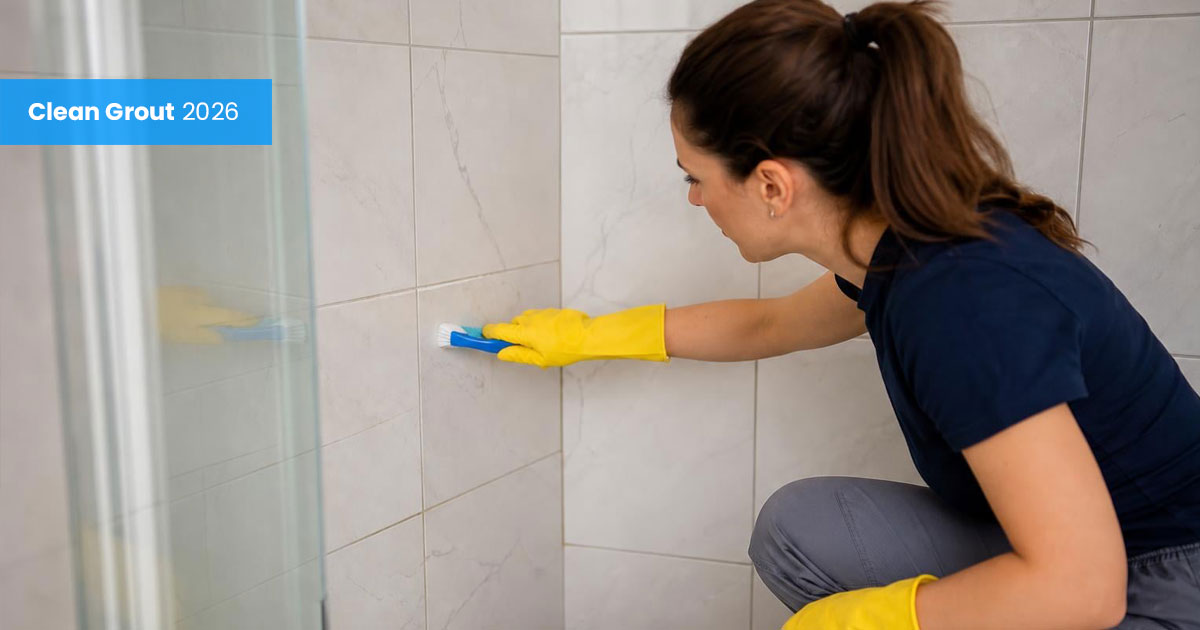
Clean Grout 2026: Safe Methods and When to Call Pros
TLDR
Clean grout means grout lines free from embedded dirt, soap scum, grease, mould residue, and cleaning-product film, returned as close as practical to their true colour. It does not mean every grout line has to be white. The safest approach is to identify the grout type and stain type first, then use the mildest suitable cleaner with thorough rinsing and extraction. When mopping and scrubbing stop working, professional tile and grout cleaning is usually more effective and safer than switching to harsher chemicals.
What Does “Clean Grout” Actually Mean?
Clean grout is a condition, not a colour.
Grout comes in white, grey, beige, charcoal, and many other shades. The purpose of cleaning is to remove contaminants, not to bleach everything to a uniform white. Once soil, oils, soap scum, mould residue, and old detergent film are gone, the grout should look closer to the colour it was when installed.
Sometimes the result will not be perfect. Long-term mould staining can leave faint marks in porous grout even after thorough treatment. Grout that has absorbed years of cooking oil or body oils may carry some permanent discolouration. And if the grout is cracked, missing, or soft, cleaning will not fix a structural problem. Cementitious grout is porous and absorbs stains at a microscopic level, which is why managing expectations matters before picking up a scrub brush.
Here is a quick reference for terms that people often confuse:
|
Term |
What It Means |
|---|---|
|
Clean grout |
Soil and residue removed; closer to true colour |
|
Whitened grout |
Stain lightened by bleaching or oxidising; not necessarily deep-cleaned |
|
Sealed grout |
Clean grout treated with a penetrating sealer to resist future staining |
|
Colour-sealed grout |
Grout coated with a colourant for uniform appearance and protection |
|
Regrouted joints |
Old grout cut out and replaced with new material |
|
Recaulked joints |
Silicone or caulk replaced, usually in corners or wet-area movement joints |
If your grout looks dark despite regular mopping, Joni’s Cleaning offers tile and grout cleaning across the Gold Coast and nearby areas with transparent quotes and no hidden fees.
Why Grout Gets Dirty Faster Than Tile
A floor-care practitioner on LinkedIn frames this well: tile is like a plate, and grout is more like a sponge with texture. Tile surfaces are dense and relatively smooth, so a damp cloth picks up most spills. Grout sits in a recessed joint with a rougher, more porous surface. Soil, grease, and moisture settle into those tiny pores and hold on.
Mopping often makes the problem worse. LATICRETE’s Australian maintenance guide notes that damp mopping can deposit dirt onto grout and tile surfaces, and the company recommends removing mop water by vacuum before it dries. The Tile Council of North America (TCNA) adds that soap film left behind on grout attracts more dirt over time.
Put simply, mopping spreads dirty water into the lowest, most porous part of the floor: the grout joint. That is why grout darkens steadily while the tile beside it still looks fine. For a closer look at this dynamic, read about why professional tile cleaning matters for tiled floors.
Common Types of Dirty Grout
Not all dirty grout has the same cause, and the cause determines the fix. Before choosing a cleaner, figure out which problem you actually have.
|
What You See |
Likely Cause |
What Helps |
|---|---|---|
|
Dark grout lines on floors, especially hallways and kitchens |
Foot traffic soil and mop residue settling into porous grout |
Deep clean with alkaline cleaner, rinse, extract |
|
Sticky, dark grout near stovetops or splashbacks |
Cooking oils binding with dust and detergent |
Alkaline degreaser, not vinegar |
|
Grey, filmy shower grout |
Soap scum, body oils, hard water minerals |
Dedicated bathroom tile cleaner with thorough rinse |
|
Black, green, or pink patches in wet areas |
Mould and mildew growth |
Cleaning plus moisture and ventilation control |
|
White powdery or crusty deposits |
Efflorescence from moisture migration through the substrate |
Specialist assessment; cleaning alone may not address the moisture source |
|
Patchy, cloudy appearance |
Old sealer, wax, or cleaning-product residue |
Stripping and re-cleaning, often professional territory |
|
Cracked or crumbling lines |
Physical damage or deterioration |
Not a cleaning problem; needs repair or regrouting |
TCNA notes that white residue on grout can result from moisture migration, which is one of the hardest causes to fix because the moisture source must be found, not just the surface wiped down.
When grout lines look dull across large areas, understanding why tile cleaning is essential can help set realistic expectations about what DIY methods will and will not achieve.
Know Your Grout Type First
The grout type changes what is safe to use on it.
Cementitious grout is by far the most common in Australian homes. It is porous, absorbs stains, and is vulnerable to acidic cleaners. TCNA explains that it has a large surface area at the microscopic level, which is why sealing is generally recommended.
Epoxy grout is much more stain-resistant and non-porous. It usually does not need sealing. But it still needs regular cleaning because surface grime, soap scum, and build-up accumulate over time.
Silicone or caulk joints appear in corners, where walls meet floors, and around fixtures. Mould-stained silicone usually needs replacement rather than scrubbing. No amount of cleaner will restore silicone that has gone black throughout.
Colour-sealed grout has a protective coating or colourant applied over it. Abrasive cleaners or harsh chemicals can damage the coating. Always check with the manufacturer before cleaning.
Safe Ways to Clean Grout
The safest approach follows a “mild to stronger” ladder. Start with the gentlest option that matches the soil type. Only step up if needed.
pH-Neutral Cleaner for Routine Maintenance
For everyday upkeep, a pH-neutral tile and stone cleaner is the safest choice. It will not degrade cement grout or etch acid-sensitive surfaces like marble and travertine. LATICRETE recommends this as the standard routine cleaner for all their finish materials.
Alkaline Cleaner for Grease and Heavy Soil
When grout has absorbed cooking oil, heavy foot traffic soil, or built-up detergent residue, an alkaline (high-pH) cleaner is more effective. TCNA says alkaline cleaners are generally preferable to acid-based products for grout. Let the cleaner dwell for a few minutes (LATICRETE suggests three to four minutes for stubborn grout stains), then agitate with a nylon brush.
Dedicated Mould or Soap-Scum Cleaner for Wet Areas
Shower grout needs a product specifically designed for mould and soap scum on hard surfaces. This is different from a general-purpose bathroom spray. After cleaning, moisture control is essential to prevent regrowth.
Steam as a Supplementary Tool
Steam cleaners are popular for grout. Practitioners on Reddit frequently recommend steam with a grout nozzle attachment, and many report good results on general grime. But users in the same threads report steam doing little against grease, old sealer residue, or deep staining. Steam can help loosen surface soil, but chemistry, agitation, rinsing, and extraction still matter.
Professional Cleaning for Embedded Problems
When DIY methods plateau, professional grout cleaning brings stronger (but surface-matched) chemistry, mechanical agitation, high-temperature rinsing, and extraction. As one practitioner on a carpet cleaning forum put it, tile cleaning is about chemistry as much as it is about equipment.
What Not to Use on Grout
This section is where most generic cleaning guides go wrong.
Vinegar as a routine grout cleaner. Cement-based grout is alkaline. Vinegar is acidic. Over time, acid can dissolve cement grout and may eventually lead to the need for regrouting. It can also etch natural stone. Occasional spot use with careful rinsing is different from habitual application, but vinegar should not be the default.
Bleach as the go-to mould treatment. The EPA does not recommend chlorine bleach for routine mould cleanup. Dead mould can still trigger allergic reactions, so it must be physically removed, not just killed. A tile contractor’s office manager on Reddit warns against repeated bleach use, arguing it can degrade grout over time. Bleach may lighten a stain, but lightening is not deep cleaning.
Mixing cleaning chemicals. The CDC says never mix bleach with ammonia or any other cleanser. Queensland Health also warns against mixing vinegar with bleach. Toxic fumes from chemical combinations are a real hazard, not a theoretical one.
Dry brushing mould. The Queensland Government warns that dry brushing can release mould spores into the air and spread contamination to other areas.
Oil or wax-based floor cleaners. TCNA warns these leave a film in grout that traps dirt. A LinkedIn floor-care practitioner adds that applying floor finish over tile and grout creates a maintenance problem because the finish may not adhere to dense tile but penetrates porous grout and locks in soil.
Excessive pressure on weak grout. High-pressure cleaning is a useful professional tool, but compromised grout can be further damaged. A Houzz discussion includes a caution that aggressive pressure can remove the top layer of weakened grout, exposing larger pores that catch more soil later. Pressure needs to be matched to grout condition.
DIY Clean Grout Checklist
If the grout is structurally sound, here is a safe and practical workflow:
- Identify the tile surface. Ceramic, porcelain, or natural stone? Natural stone changes the cleaner choice significantly.
- Check grout condition. If grout is cracked, missing, powdery, or soft, stop. That is a repair issue, not a cleaning issue.
- Dry sweep or vacuum loose grit. Do not push sand and dirt deeper into grout lines.
- Test in a hidden area. LATICRETE recommends cleaning a small inconspicuous spot and letting it dry fully before using a product more broadly.
- Apply the mildest suitable cleaner. pH-neutral for maintenance. Alkaline for grease or heavy soil.
- Let the cleaner dwell. Follow the product label. A few minutes is typical for stubborn stains.
- Agitate with a nylon grout brush. Avoid wire brushes, which can scratch tile glazes and tear at grout.
- Rinse thoroughly. Dirty cleaner left behind becomes sticky residue that attracts new soil.
- Extract or remove dirty water. A wet vacuum is ideal. TCNA recommends vacuuming the dirty water, rinsing, then vacuuming again.
- Dry the area fully. Open windows, run exhaust fans, wipe down surfaces in wet areas.
- Consider sealing cement grout. Once the grout is clean and dry, a penetrating sealer helps resist future staining. Epoxy grout usually does not need it.
A Note on Baking Soda and Hydrogen Peroxide
This combination shows up constantly in online cleaning communities. It is accessible and often produces visible improvement on light surface staining. Make a paste, apply it, let it sit briefly, scrub with a nylon brush, and rinse well. It works for some people on some surfaces. But it is not a substitute for a proper alkaline cleaner on greasy build-up, and it will not address mould growth, efflorescence, or deep discolouration.
When Professional Grout Cleaning Is Worth It
DIY works well for routine maintenance and light surface staining. But there are clear situations where professional cleaning makes more sense:
- Grout is dark across a large floor area and mopping has made it worse over time.
- Kitchen grout has years of embedded cooking oil.
- Shower mould keeps returning despite regular cleaning and ventilation efforts.
- Grout has a white haze or powdery residue that comes back after every clean.
- Natural stone or an unknown tile type is installed and the wrong product could cause permanent damage.
- The property needs to look its best for a rental inspection, sale, or guests.
- Someone has used acids or bleach repeatedly and the grout is starting to deteriorate.
For renters and property managers, grout condition stands out during inspections. If you are in that situation, preparing for lease inspections often means addressing tile, grout, and carpets together.
Joni’s Cleaning also provides end-of-lease cleaning services for tenants who need a predictable result before moving out.
How Professionals Clean Grout
Professional grout cleaning is more than showing up with a pressure washer. The process typically involves several distinct stages:
- Inspection. Checking the tile type, grout type, stain type, and overall condition before selecting a cleaning approach.
- Pre-treatment. Applying a cleaner matched to the soil (usually alkaline for grease and general build-up) and allowing it to dwell. Some services allow dwell times up to 20 minutes for heavy contamination.
- Agitation. Scrubbing with purpose-built brushes or rotary machines to loosen embedded contamination from grout pores.
- Hot water rinse and extraction. Using controlled pressure and temperature to flush soil out of the grout, then extracting the dirty water so it does not resettle.
- Drying. Fans, ventilation, or speed-drying equipment to prevent moisture lingering in the joints.
- Assessment. A good technician will identify grout that needs sealing, recolouring, or regrouting, rather than promising every line will look brand new.
One r/CarpetCleaning contributor notes that the pre-treatment and dwell time do the heavy lifting. Pressure and heat help rinse and extract, but without the right cleaner doing its job first, you are just pushing water at dirty grout.
A common concern raised on Houzz is that users want maintenance routines, not just one-off rescue cleans. That instinct is right. A professional clean resets the baseline, but ongoing care determines how long the result lasts. For more on what this process looks like locally, read about expert tile and grout cleaning across Gold Coast, Brisbane, Logan, and Tweed Heads.
Keeping Grout Clean After Cleaning
Cleaning grout properly takes effort. Keeping it clean afterwards takes less effort but more consistency.
- Dry shower walls and floors after use. A squeegee or towel wipe-down takes 30 seconds and removes the moisture mould needs.
- Run exhaust fans during and after showers. Leave them on for at least 10 minutes after the water stops.
- Ventilate bathrooms, kitchens, and laundries. Open a window or door when humidity builds.
- Use a pH-neutral cleaner for routine maintenance. Skip the vinegar. Skip the bleach. A purpose-made tile cleaner is safer and leaves less residue.
- Avoid oil or wax-based floor products. These coat the surface and trap soil in grout pores.
- Do not overuse detergent. More soap means more residue, not a better clean.
- Fix leaks promptly. Persistent moisture behind tiles or under floors causes efflorescence and creates ideal mould conditions.
- Re-seal cementitious grout periodically. Sealer buys time, but it does not make grout self-cleaning.
The Queensland Government recommends keeping wet areas dry, wiping away moisture, opening windows when showering or cooking, and cleaning wet areas regularly to prevent mould in bathrooms, kitchens, and laundries.
Gold Coast Homes: Humidity, Bathrooms, and Mould
Gold Coast homes face a specific combination of challenges. Bureau of Meteorology data for Gold Coast Seaway shows annual rainfall of 1,302 mm and average 9 am relative humidity of 67%, with monthly humidity commonly sitting between 60 and 72%.
That moisture, combined with warm temperatures, makes bathrooms, laundries, and kitchens prime zones for mould growth. In most Gold Coast homes, grout gets dirty for two reasons at once: soil from foot traffic and dampness in wet areas. If the bathroom stays humid after showers, cleaning grout alone will not stop mould from returning.
This is also why indoor air quality matters. Mould spores circulate through the home, especially when air conditioning recirculates air without proper filtration or cleaning. If mould in tiled wet areas is an ongoing problem, air conditioner cleaning should be part of the same effort.
On the Gold Coast, cleaning is half the job. Drying and ventilation are the other half.
Frequently Asked Questions
Does clean grout mean white grout?
No. Clean grout means soil, residue, and contaminants have been removed. The grout should look closer to its original installed colour, which might be grey, beige, charcoal, or another shade entirely. Expecting every line to turn white is unrealistic unless the grout was white to begin with and the staining is fully removable.
Is vinegar safe for cleaning grout?
Not as a routine cleaner. Cement-based grout is alkaline, and repeated acid exposure can degrade it over time. TCNA specifically says alkaline cleaners are generally preferable for grout. Vinegar can also etch natural stone like marble and travertine. Use a pH-neutral or alkaline cleaner instead.
Is bleach effective for mouldy grout?
Bleach may lighten stains, but the EPA does not recommend it for routine mould cleanup. Dead mould can still cause allergic reactions, so it needs to be physically removed, not just killed. Repeated bleach use can also weaken cement grout. The better approach is to clean with a suitable product, address the moisture source, and improve ventilation.
Why did my grout turn white after cleaning?
This is a common frustration, especially in Australian rental properties where forum users frequently report the problem. The white film could be cleaner residue, dried detergent, grout haze, or efflorescence (mineral salts drawn to the surface by moisture). Rinse and extract more thoroughly. If the white residue keeps returning, moisture migration may be the underlying cause, and that typically requires professional assessment.
Can steam clean grout effectively?
Steam works well for loosening surface grime on some grout types. Practitioners on Reddit report mixed results: useful for everyday dirt, less effective against grease, old sealer, mineral deposits, or deep staining. Treat steam as a supplementary tool rather than a complete solution. Chemistry, scrubbing, rinsing, and extraction still matter.
When should grout be regrouted instead of cleaned?
Regrouting is appropriate when grout is cracked, missing, soft, powdery, or permanently stained beyond what cleaning or colour sealing can fix. TCNA notes that new grout generally cannot be placed directly over old grout because contaminants can prevent proper bonding. The old material needs to be removed first.
Should grout be sealed after cleaning?
Cementitious grout usually benefits from a penetrating sealer once clean and fully dry. Sealer helps resist staining but does not waterproof the grout or make it self-cleaning. Epoxy grout typically does not need sealing. If grout has been colour-sealed, check with the product manufacturer about compatible maintenance products.
How often should grout be professionally cleaned?
There is no single rule. High-traffic floors, busy kitchens, and poorly ventilated bathrooms need attention more often than a spare bedroom. The best indicator is the grout itself: if it looks visibly darker than it should despite regular maintenance, it is time for a professional clean.
Refreshing the whole property? Joni’s Cleaning can coordinate tile and grout cleaning with carpet steam cleaning, upholstery, mattress, air conditioner cleaning, and pest control in a single visit across the Gold Coast, Logan, Brisbane, and Tweed Heads. Find out more about organising a coordinated visit.