
How to Do Mattress Cleaning at Home: 8 Safe DIY Steps (2026)
TLDR
Mattress cleaning at home means removing dust, body oils, odours and light stains using vacuuming, careful spot cleaning and thorough drying. The safest approach starts dry (vacuum first), uses the least liquid possible for the stain type, and lets the mattress dry completely before you put bedding back on. Baking soda works for surface odours, enzyme cleaners are best for urine and pet messes, and foam mattresses need extra caution because they absorb moisture and may not dry properly. If the stain is deep, the smell keeps returning, or you see mould, DIY cleaning may not be enough.
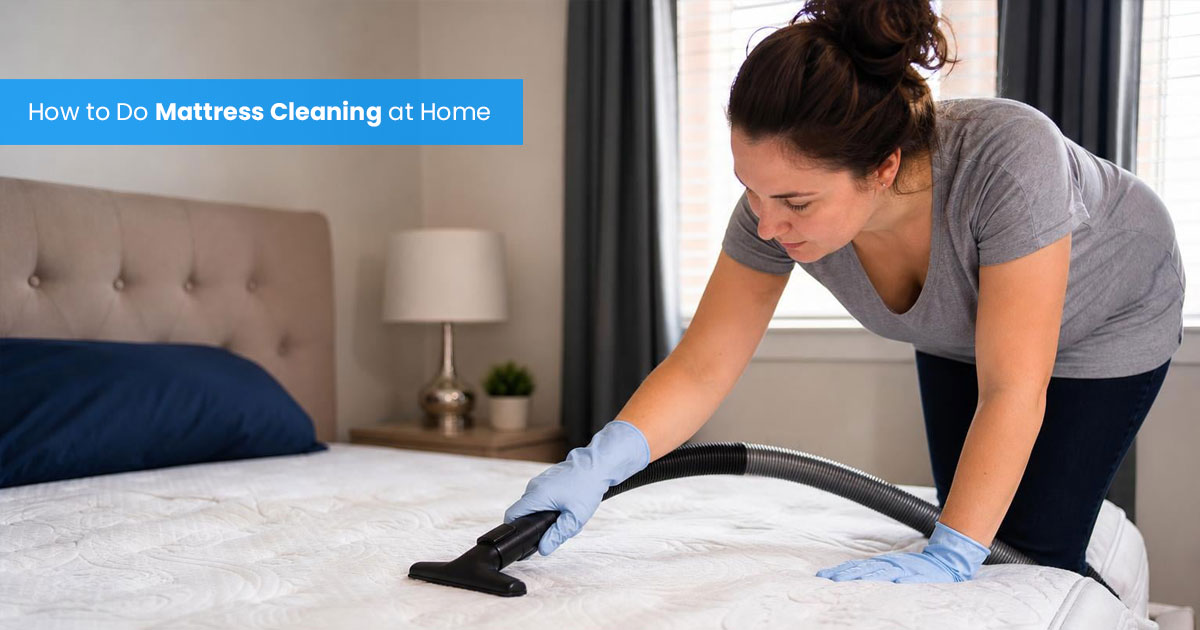
What Mattress Cleaning at Home Actually Means
Mattress cleaning at home is a maintenance job, not a deep wash. It involves vacuuming dust, skin flakes and debris from the mattress surface, spot treating visible stains with small amounts of the right cleaner, deodorising if needed, and drying everything fully before the bed gets remade.
It is not the same as washing a mattress, soaking it, or stripping it down to nothing. The goal is to keep your sleep surface fresher, reduce allergen buildup and deal with small accidents before they become permanent problems.
The most important thing to understand: mattress cleaning at home is a moisture control job first and a stain removal job second. Choice warns that mattresses should be kept as dry as possible, especially foam mattresses, because cleaning fluids can take much longer to dry or may never dry properly.
If you are on the Gold Coast, Brisbane or Logan and your mattress needs more than a basic refresh, professional mattress cleaning with extraction equipment can handle what DIY cannot.
The Safe Baseline Method: Clean Your Mattress Step by Step
Before getting into specific terms and techniques, here is the safe routine that every home mattress clean should follow.
1. Check the care label. Some mattresses have specific instructions about vacuuming, steaming or chemical use. Always look before you start.
2. Strip all bedding. Remove sheets, pillowcases, mattress protectors and doona covers. Wash everything, ideally above 60°C if the labels allow, to kill dust mites and wash away allergens.
3. Vacuum the entire mattress. Use an upholstery attachment or crevice tool. Cover the top, sides, seams and any grooves in pillow-top designs. Cleaning practitioner Brandon Pleshek from Clean That Up recommends always vacuuming before any wet treatment because skipping this step turns dry dirt into mud.
4. Spot treat visible stains. Use the smallest amount of cleaner that works for the stain type. More on matching cleaners to stains below.
5. Blot, never scrub. Press a clean cloth into the stain to absorb moisture. Scrubbing pushes contamination deeper into the fibres.
6. Deodorise if needed. Sprinkle a light layer of bicarb soda, leave it for at least 30 minutes (longer is fine), then vacuum it up thoroughly.
7. Dry completely. Use fans, open windows, or run your air conditioner on dry mode. Do not put bedding back on until the mattress is fully dry, not just surface dry.
8. Protect. Put a clean mattress protector on before remaking the bed.
How Often Should You Clean Your Mattress?
There is no single right answer, but twice a year is the safest baseline for normal household use. Both Choice and Dyson’s consulting microbiologist recommend a thorough clean roughly every six months. Good Housekeeping suggests maintenance every three months, particularly for dust, stains and odour buildup.
The practical approach is to adjust based on your situation:
- Normal use, no allergies, no pets: deep clean every 6 months.
- Allergies, pets, young kids, heavy sweating, or food and drink in bed: vacuum and refresh every 1 to 3 months, deep clean every 3 to 6 months.
- Fresh spill, urine, vomit or blood: treat immediately, regardless of schedule.
A thorough mattress clean, including baking soda dwell time and drying, can take up to 24 hours according to Choice. Plan accordingly.
Cleaning Methods: What the Terms Actually Mean
Routine Clean
A non-emergency mattress refresh. Strip bedding, vacuum, deodorise if needed, rotate the mattress if the manufacturer allows it, and put a clean protector on. This is what you do before there is a stain or smell problem, and it is the foundation of mattress cleaning at home.
Spot Cleaning
Cleaning only the stained area with a small amount of appropriate cleaner. The goal is to lift the stain without driving moisture deeper into the mattress. This works best for spills, sweat marks, small urine spots and food stains.
Deep Cleaning
A more thorough clean targeting dust, odour, multiple stains and hygiene concerns. At home, deep cleaning still has limits because you lack professional extraction power. If the mattress is wet deep inside after a home deep clean, household fans and open windows may not dry it fast enough to prevent problems.
Australian marketplace Airtasker notes that professional mattress cleaning costs roughly $70 to $128 on average, and steam-cleaned mattresses take about 5 to 8 hours to dry depending on weather conditions.
Steam Cleaning
This term causes more confusion than almost any other. People use “steam cleaning” to describe at least two very different things:
- Vapour steam from a garment or handheld steamer: produces heat that can help surface sanitising, but adds moisture without extracting it. SleepMaker recommends holding a steamer 5 to 7 cm above the surface and keeping it damp rather than wet. They also warn that foam-heavy mattresses should not be steam cleaned because foam is extremely absorbent.
- Hot water extraction: a professional method that injects heated water or cleaning solution and immediately extracts it with suction. This is often called “steam cleaning” casually, but the extraction step is what makes it effective. The IICRC (the cleaning industry’s standards body) formally lists Hot Water Extraction as a professional upholstery method.
If you are considering truck-mounted extraction equipment versus a handheld steamer, the difference in moisture removal power is significant.
Practitioners on Reddit regularly raise concerns about steam cleaning mattresses at home. Multiple threads in r/CleaningTips note that moisture can sit inside a mattress long after the outside appears dry, creating conditions for mould growth.
Dry Powder and Dry Foam Cleaning
Low-moisture alternatives where an absorbent powder or foam cleaner is applied to the surface and then vacuumed away after drying. These are useful for surface freshening but are not deep biological stain solutions. They appear in professional service menus and some consumer products.
Sanitising vs Deodorising
These terms get mixed up constantly. Sanitising means reducing microbes or odour-causing bacteria on a surface. It is not the same as sterilising, and strong disinfectants can actually damage mattress materials. Dyson advises against strong disinfectants because they may compromise material integrity.
Deodorising means reducing smell, usually through ventilation, baking soda, a light vinegar treatment, or an enzyme cleaner. The important distinction: deodorising does not automatically remove the contamination causing the smell. If the source remains inside the mattress, the odour will come back.
Stains and Allergens: Match the Problem to the Solution
Sweat and Yellow Stains
Yellow or brownish marks on a mattress are usually caused by sweat, body oils and skin residue oxidising over time. A light hydrogen peroxide solution or bicarb soda can help, depending on the mattress material. Good Housekeeping recommends a diluted mixture of peroxide, water and dish liquid for yellow stains, followed by complete drying.
Urine Stains
Fresh urine needs immediate blotting. The Sleep Foundation states that stains get harder to remove with time, and rubbing can push urine deeper into the bed. For fresh human urine, blotting followed by a vinegar solution or appropriate stain process often works. Old urine that has dried and set is much harder to deal with at home.
If the smell returns after the mattress appears dry, that is called odour rebound. It usually means contamination remains deeper than the surface. This is one of the most common complaints in cleaning communities online.
For persistent urine odour problems, mattress urine smell removal with professional extraction can reach contamination that blotting and spraying cannot.
Pet Urine
Pet urine is more concentrated than human urine and smells worse. The Sleep Foundation recommends pet-specific enzyme cleaners because they break down odour-causing components rather than masking them. This is the strongest recurring recommendation across both professional sources and community discussions.
Reddit users in r/CleaningTips consistently echo this point: if urine or pet messes are cleaned with a general water solution, the smell often returns. Enzyme cleaners targeting the organic material are the practical answer. The same principle applies to urine smell in furniture and upholstery.
Blood Stains
Blood is a protein-based stain that sets with heat. This is a critical rule: always use cold water for blood stains. Time to Sleep warns that hot water can set blood into mattress fibres permanently. Blot gently with a cold, damp cloth. Do not scrub, because scrubbing can spread the stain further and deeper.
Vomit
Remove solids first, blot moisture, use gloves, and spot clean with a mild cleaner. Deodorise and dry completely. Vomit is acidic and biological, so prompt treatment matters both for the stain and for hygiene.
Dust Mites
Dust mites are microscopic creatures that live in mattresses, bedding, carpets and upholstered furniture, feeding on shed skin cells. They are a major indoor allergen source according to NIEHS, and can worsen allergies and asthma.
Here is the honest part that many cleaning guides skip: no vacuum cleaner, dust mite spray or dry cleaning process will completely remove house dust mites. ASCIA, Australia’s peak clinical allergy body, is clear on this. Dust mites are especially common in warm, humid coastal areas, which makes this particularly relevant for Gold Coast, Logan and Brisbane households.
What actually helps reduce exposure:
- Washing sheets and pillowcases weekly in water hotter than 60°C
- Covering mattresses, pillows and quilts with dust-mite-resistant encasement covers
- Reducing indoor humidity (below about 50%)
- Regular vacuuming (though the National Asthma Council notes that vacuuming can stir allergen into the air for up to 20 minutes, so allergy sufferers may want to leave the room briefly)
Dust mites, pet dander and allergens also collect in carpets, lounges and other soft surfaces throughout the bedroom and home. Mattress cleaning is only one piece of a broader approach to indoor allergen management. For households dealing with allergy concerns, upholstery cleaning across couches and bedheads is worth considering alongside the mattress.
Mould
Mould on a mattress is not a normal stain. It is fungal growth caused by moisture, and it is a serious warning sign. The EPA states that porous materials that are wet and mouldy may need discarding because mould can infiltrate the empty spaces and crevices inside, making complete removal difficult or impossible.
Surface mould marks on a mattress are one thing. Visible mould that has grown into a porous mattress (especially foam) is another. Reddit communities in r/CleaningTips and r/Mold are blunt about this: if mould has penetrated a foam mattress, many experienced users advise replacement rather than surface cleaning. This aligns with the EPA’s guidance.
The EPA also says wet materials and furnishings should be dried within 24 to 48 hours to prevent mould growth. Mould control is fundamentally moisture control.
Bed Bugs
Bed bugs require pest control steps, not just mattress cleaning. The EPA recommends sealing mattresses and box springs in protective covers to trap bugs, sealing and discarding vacuum bags outside after each use, and applying steam at specific temperatures without forceful airflow that scatters the insects. DIY heat treatments may not work, and professional pest control methods are often needed.
Do not assume that a mattress clean alone resolves a bed bug infestation.
Products and Tools: What Works and What to Watch Out For
Bicarb Soda (Baking Soda)
Baking soda absorbs surface odours and some moisture. Sprinkle it lightly, leave it on (Choice recommends up to 24 hours for best results), and vacuum it thoroughly afterward.
What baking soda is not: a deep disinfectant, a urine cure-all, or a magic fix. Brandon Pleshek from Clean That Up takes a more contrarian view, noting that he often skips baking soda because it can be messy, hard to fully remove and potentially hard on vacuums. He prioritises vacuuming first, targeted stain treatment and aggressive drying instead.
Treat baking soda as a surface deodoriser, not a deep cleaning solution.
White Vinegar
A mild acidic cleaner, usually diluted with water. Useful for some light stains and odours when used sparingly. Choice lists diluted distilled white vinegar as an option for light to moderate mattress stains. The key word is sparingly. Do not soak.
Hydrogen Peroxide (3%)
A spot-treatment option for some biological and yellow stains, particularly blood and sweat marks. Choice recommends 3% hydrogen peroxide for heavy stains, but warns it can damage a mattress if applied improperly. The Sleep Foundation adds that it can damage foam or latex mattresses and discolour fabric.
Always patch test hydrogen peroxide on a hidden area first. Use as little as needed and avoid saturating the mattress.
Enzyme Cleaner
This is the product that matters most for urine, pet urine and organic odours. Enzyme cleaners use enzymes to break down the organic material causing the stain and smell, rather than just covering it up. Both the Sleep Foundation and experienced cleaning practitioners recommend them as the best option for pet-related messes.
Follow the dwell time instructions on the label. Enzyme cleaners need time to work. After treatment, blot away excess moisture and dry fully.
Mattress Protector vs Allergen Encasement
These are not the same thing, and the difference matters.
A mattress protector is a removable washable layer that protects against sweat, oils and spills. It makes future cleaning easier and is far cheaper than repeating mattress stain removal. Reddit users frequently recommend buying a waterproof protector after any stain incident.
An allergen encasement is a full zippered cover specifically designed to reduce dust mite and allergen exposure. It should enclose the entire mattress. ASCIA recommends dust-mite-resistant covers for mattresses, pillows and quilts, washed at least every two months.
If allergies are the concern, a basic protector may not be enough. Users in r/Allergies distinguish between these two types and report that full encasements combined with humidity control made more difference to their symptoms than cleaning alone.
Safety Terms Every Home Cleaner Should Know
Blotting vs Scrubbing
Blotting means pressing a clean cloth straight down to absorb liquid. Scrubbing means rubbing back and forth. Blotting lifts moisture out. Scrubbing pushes contamination deeper and can spread the stain. For mattress cleaning at home, blotting is almost always the right approach.
Dwell Time
The time a cleaner needs to sit on a stain before blotting or extraction. The Sleep Foundation recommends letting a vinegar solution sit for 15 minutes on urine before blotting, and baking soda for at least 8 hours to absorb moisture and odour. More cleaner is not always better. Correct dwell time and proper removal matter more.
Patch Test
Testing a cleaner on a hidden area of the mattress before treating the visible stain. This is essential before using hydrogen peroxide, vinegar or any commercial stain remover. Some products can discolour fabric or damage specific mattress materials.
Over-Wetting
Using more liquid than the mattress can release or dry safely. This is the single biggest DIY mistake when cleaning a mattress at home. Choice warns against forcing liquids into mattress material. The practical rule from Time to Sleep: use as little cleaning solution as possible, do not soak the bed, and blot rather than pour.
Surface-Dry vs Fully Dry
The mattress top can feel dry to the touch while deeper layers still hold moisture. This is especially common after steam cleaning or wet spot treatment. If you remake the bed before the inside is dry, you are creating conditions for mould growth and odour problems.
In humid climates like the Gold Coast, drying takes longer. Clean early in the day so the mattress has a full day of airflow. Use fans, open windows, or run air conditioning on dry mode. Do not rush to put bedding back on.
Wicking
When moisture or dissolved stain material travels upward through the fibres as the mattress dries, making a stain reappear or grow larger than the original spot. This is more likely when a stain is soaked rather than lightly treated and extracted. It is one reason why professional extraction outperforms home spot cleaning for larger stains.
When DIY Is Not Enough
Mattress cleaning at home works well for routine maintenance and light stains. It has real limits.
Consider professional help when:
- Urine or pet odour returns after drying
- The stain is large, old, or has soaked through to deeper layers
- The mattress is foam and moisture risk is high
- Allergy symptoms are a priority and you want deeper extraction
- The mattress is needed quickly (guests, rental inspection, end of lease)
- You cannot dry the mattress fully at home due to weather or lack of airflow
Consider replacing when:
- Visible mould has grown on or inside the mattress, especially foam
- The mattress is heavily contaminated and old enough that replacement makes more sense than restoration
- Bed bug infestation is confirmed and the mattress is beyond encasement and treatment
For mattress situations beyond a basic home clean, professional mattress deep cleaning with extraction equipment can remove what blotting and spraying cannot. Joni’s Cleaning provides mattress cleaning and sanitising across the Gold Coast, Logan, Brisbane, Tweed Heads, Springfield and nearby areas with custom quotes and no hidden fees.
Frequently Asked Questions
How often should I clean my mattress at home?
Every 6 months is the safest baseline for normal use. If you have allergies, pets, young children, or eat and drink in bed, vacuum and refresh every 1 to 3 months and do a deeper clean every 3 to 6 months. Fresh spills and accidents should be treated immediately.
Can I use baking soda to clean a mattress?
Yes, but understand what it does. Baking soda is a surface deodoriser and moisture absorber. It helps with general odour and light freshening. It is not a disinfectant, and it will not solve deep urine contamination or kill bacteria. Sprinkle lightly, leave for at least 30 minutes (up to 24 hours), and vacuum thoroughly.
Can I steam clean a mattress at home?
Sometimes, but be careful. A garment steamer adds moisture without extracting it, which is risky for foam mattresses. SleepMaker says foam-heavy mattresses should not be steam cleaned. If you do steam, hold the steamer above the surface rather than pressing it in, and allow hours of drying time with good airflow.
How long does a mattress take to dry after cleaning?
Light spot cleaning may dry in a few hours. A deeper clean can take 5 to 8 hours or up to 24 hours depending on how much moisture was used, the mattress type, humidity, and airflow. In humid conditions, plan for the longer end.
What removes urine smell from a mattress?
For fresh human urine, blotting followed by a diluted vinegar solution and baking soda often works. For pet urine, enzyme cleaners are the best option because they break down the organic compounds causing the odour. If the smell returns after drying, contamination has likely soaked deeper than surface treatment can reach, and professional urine odour removal may be the next step.
Does mattress cleaning remove dust mites?
It can reduce dust and allergen exposure, but no vacuum, spray or cleaning process completely removes dust mites. ASCIA is clear on this. The most effective combination is regular mattress vacuuming, washing bedding above 60°C weekly, using allergen encasement covers, and keeping indoor humidity below about 50%.
Can I clean mould off a mattress?
Surface marks may be treatable, but visible mould that has grown into a porous mattress (especially foam) may not be safely cleanable. The EPA says porous mouldy materials may need to be discarded because mould can penetrate into spaces where complete removal is impossible. If you see or smell mould inside a mattress, replacement is often the safer choice.
Is a mattress protector the same as an allergen encasement?
No. A mattress protector guards against sweat, oils and spills. An allergen encasement is a full zippered cover designed to reduce dust mite and allergen exposure. If allergies are the main concern, a standard protector is not enough. ASCIA recommends dust-mite-resistant encasement covers for mattresses, pillows and quilts.