
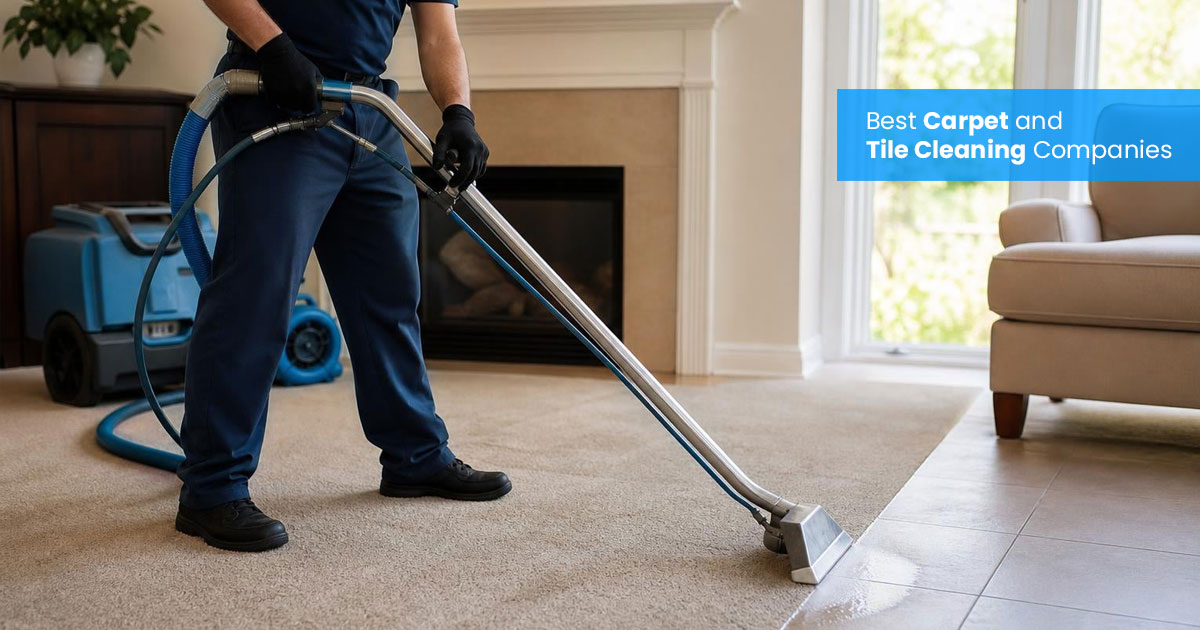
Best Carpet and Tile Cleaning Companies – 2026 Guide
TLDR
The best carpet and tile cleaning companies are not simply the cheapest options. They match the right cleaning method to the job, explain their quote inclusions upfront, manage drying carefully, and give honest advice about what cleaning can and cannot fix. This glossary covers the essential terms (hot water extraction, truck-mounted machines, grout sealing, pet urine treatment, and more) so you can compare providers with confidence. It also covers Queensland end-of-lease rules, common pricing structures, and warning signs to watch for.
What Makes a Carpet and Tile Cleaning Company “Best”?
Every cleaning company describes its service as “deep,” “professional,” or “thorough.” Those words do not mean much without context.
The best carpet and tile cleaning companies stand out because of specific, verifiable things: equipment matched to the job, quotes that list what is and is not included, honest stain advice, and a clear drying plan. The Carpet and Rug Institute recommends professional deep cleaning every 12 to 18 months, and notes that professional cleaning may be tied to carpet warranty requirements. Most households will hire a cleaner multiple times, so choosing well the first time matters.
For tile and grout, the decision is equally important. The Tile Council of North America explains that cementitious grout is porous and absorbs stains, and regular mopping often pushes dirty water into those pores rather than removing it. A good tile cleaning company understands grout chemistry, extraction, and sealing. A bad one just blasts everything with pressure and leaves.
The core argument is straightforward: if you understand the terms that carpet and tile cleaning companies use, you can compare quotes more intelligently and avoid choosing based on a low headline price alone.
Ask for a transparent carpet cleaning quote from a local Gold Coast team that uses truck-mounted equipment and explains the process before starting.
The Buyer’s Scorecard: How to Compare Companies
Before picking a provider, score them on these practical criteria. A company does not need to be perfect on every one, but it should be strong where your job needs it most.
Method fit. The company explains whether hot water extraction, dry cleaning, or another method suits your carpet type, soil level, and timeline. A red flag: claiming one method works best for every situation.
Equipment fit. Truck-mounted machines generally offer stronger suction and heat than portable units, but apartments and high-rises sometimes need portable equipment. The best carpet and tile cleaning companies address access and equipment before quoting, not after arriving.
Quote clarity. The quote lists inclusions, exclusions, and potential extras. Under Australian Consumer Law, the ACCC warns against misleading drip pricing where fees are gradually added after a low initial number.
Stain honesty. No responsible company guarantees every stain and odour will vanish without inspecting first. Pet urine, permanent dye stains, and grout damage are common cases where honesty matters more than promises.
Drying plan. The EPA’s mould guidance says wet building materials should be dried within 24 to 48 hours to prevent mould growth. A cleaner who cannot explain realistic drying expectations is a concern.
Reviews with detail. Look for reviews that mention specific job types (end-of-lease, pet odour, tile grout, commercial) rather than just star ratings.
Bundled convenience. Some providers handle carpet, tile, upholstery, air conditioning, and pest control in coordinated visits. That reduces scheduling hassle and sometimes cost.
Carpet Cleaning Terms Explained
Most of the confusion when choosing among carpet and tile cleaning companies comes from vague terminology. Here is what the common terms actually mean.
Hot Water Extraction (Steam Cleaning)
Hot water and cleaning solution are injected into carpet fibres under pressure, then extracted along with loosened soil. The Carpet Institute of Australia describes this as a high-moisture extraction method used for both interim freshen-ups and deeper corrective cleaning.
Despite the name “steam cleaning,” the process in most residential applications uses very hot water under pressure, not actual steam.
Why it matters: Hot water extraction is often the preferred choice for heavily soiled carpet, pet contamination, end-of-lease work, and high-traffic areas. It flushes out embedded grit that vacuuming alone cannot reach.
Question to ask: “Do you use hot water extraction, and how do you manage drying afterward?”
For a closer look at why this method works, read about hot water extraction benefits and when it is the right fit for your floors.
Truck-Mounted Carpet Cleaning
A cleaning system mounted inside a vehicle, typically delivering stronger suction, higher water temperature, and better waste-water recovery than portable units.
Why it matters: More powerful extraction pulls more moisture and soil from the carpet, which improves both cleaning results and drying time. Hipages notes that steam cleaning equipment may be portable or vehicle-mounted, depending on the provider and access situation.
Question to ask: “Can your truck-mounted equipment reach my property, or will you need a portable machine?”
For a detailed breakdown, see how truck-mounted cleaning works and why extraction power matters.
Portable Carpet Cleaning Machine
A smaller, self-contained unit carried inside the building. Necessary when truck-mounted hoses cannot reach the property, which is common in high-rise apartments, gated complexes, and buildings with limited parking.
Practitioners on Reddit’s r/CarpetCleaning community note that not all portable machines are equal. Some lack the suction power to properly extract soap, moisture, and odour from heavily contaminated carpet. One thread highlighted a homeowner dealing with sticky residue after multiple DIY treatments because the portable machine could not recover all the cleaning solution. If portable equipment is needed for your property, ask about its extraction capacity.
Question to ask: “What portable system will you use, and how does its extraction compare to truck-mounted?”
Dry Carpet Cleaning and Low-Moisture Methods
Methods using absorbent compounds, encapsulation chemistry, or bonnet pads with minimal water. Drying is faster, sometimes under two hours.
Why it matters: Low-moisture methods suit light maintenance cleans, offices needing areas back in use quickly, or situations where excess moisture is risky. They may not flush deep soil, pet contamination, or embedded grit as effectively as hot water extraction. The trade-off is speed versus depth.
Question to ask: “Is this a maintenance-level clean or a deep extraction clean?”
Pre-Vacuum
Vacuuming dry soil before any wet cleaning begins. The Carpet Institute of Australia calls vacuuming one of the most important steps for removing soil from carpet.
A cleaner who skips pre-vacuuming is essentially trying to wash dirt rather than extract it. Some companies charge extra for this step, so check whether it is included in the quoted price.
Question to ask: “Is pre-vacuuming part of the quote?”
Pre-Spray and Dwell Time
Pre-spray is a cleaning solution applied to carpet before extraction. Dwell time is how long that solution sits on the fibres to break down oils, grease, and soil.
Without adequate dwell time, the chemistry cannot work properly. Too much dwell time or the wrong product can leave sticky residue that attracts dirt faster after cleaning. A good cleaner adjusts both based on the soil type and carpet condition.
Question to ask: “What pre-treatment do you use, and how long does it need to sit?”
Dry Passes and Over-Wetting
Dry passes are extra extraction passes with reduced or no water, pulling additional moisture from carpet. More dry passes generally mean faster drying.
Over-wetting is the opposite problem: applying more water than the carpet, underlay, and extraction system can handle. Over-wetting can damage carpet underlay and create conditions for mould. In one Reddit thread, a homeowner reported carpets still damp 22 hours after professional cleaning, with commenters stressing the importance of proper extraction, airflow, fans, and ventilation.
Gold Coast humidity makes this especially relevant. Bureau of Meteorology data shows annual mean 9am humidity of 67% at Gold Coast Seaway, with monthly averages ranging from 61% to 72%. Higher humidity slows natural drying considerably.
Question to ask: “How many dry passes do you make, and what should I do if the carpet is still damp after 24 hours?”
Pet Urine Treatment
This is where the gap between marketing promises and reality is widest.
Pet urine does not just sit on carpet fibres. It soaks through into the backing, the underlay (pad), and sometimes the subfloor. Practitioners on Reddit’s r/CarpetCleaning community describe treating old cat urine with enzyme soaking, a subsurface extraction tool (called a water claw), truck-mounted extraction, and repeated treatments. In another thread, a dog owner had tried enzyme cleaners, a rented machine, vinegar, baking soda, and plain water, all without success, because the contamination went deeper than any home method could reach.
A separate thread showed a homeowner stuck with residue after multiple DIY attempts. Commenters pointed out that portable machines often cannot extract all the cleaning solution, leaving sticky buildup and reactivating the odour.
Why it matters: If a company promises guaranteed pet urine removal without inspecting the carpet, backing, and underlay first, treat that as a red flag. A trustworthy company will inspect, explain the contamination depth, and be honest about what may not be fully removable.
Question to ask: “Will you inspect the contamination depth before quoting, and can you explain what results are realistic?”
For more on what this process involves, see the pet stain removal glossary.
Deodorising vs. Sanitising
Deodorising reduces or masks odour. Sanitising reduces bacteria and microbes on the carpet surface. Neither replaces treating the actual source of a smell, which is critical with pet urine or mould-related issues.
Question to ask: “Are you treating the odour source, or masking it?”
Carpet Protection (Stain Guard)
A post-cleaning treatment that helps carpet fibres resist future spills and soil. The Carpet Institute of Australia advises checking manufacturer guidance before applying post-manufacturing treatments, as they may affect carpet warranties.
Question to ask: “Is carpet protection suitable for my fibre type and warranty?”
Tile and Grout Cleaning Terms Explained
Tile floors look easy to maintain. They are not. The problem is almost always the grout.
Why Grout Gets Dirty (and Mopping Makes It Worse)
Cementitious grout, the standard type in most homes, is porous. It absorbs moisture, cleaning solutions, and whatever dirt is carried in that liquid. LATICRETE’s tile and stone maintenance guidance notes that damp mopping can redistribute and deposit dirt into grout joints rather than removing it, and recommends extracting contaminated water with a wet vacuum before it dries.
Years of regular mopping can leave grout looking progressively darker. The mop pushes dirty water into porous grout lines, where it dries and accumulates. Professional tile and grout cleaning uses chemistry, agitation, and vacuum recovery to extract contaminants from within the grout rather than spreading them around.
Question to ask: “How do you extract dirty water from grout lines instead of just spreading it?”
Request a tile and grout cleaning quote for your Gold Coast home or business.
Alkaline vs. Acid Cleaners
The Tile Council of North America recommends alkaline cleaners for routine grout maintenance because cementitious grout is itself alkaline. Acid cleaners can dissolve cement-based grout over time. Acids have specific uses (mineral deposits, efflorescence) but should not be the default for general cleaning.
Question to ask: “What chemistry are you using on my grout, and why is it appropriate for my tile type?”
Grout Sealing
Applying a protective sealer after cleaning to help grout resist future staining. There are two main types.
Penetrating (impregnating) sealers bond inside the grout pores. They repel water and stains without significantly changing the grout’s appearance.
Topical sealers coat the surface. They can wear with foot traffic and may give grout a glossy or plastic appearance.
The Tile Council of North America notes that many owners choose to seal cementitious grout because of its porosity, and distinguishes between these sealer types based on durability and appearance.
Question to ask: “Do you recommend sealing after cleaning, and which type suits my floor?”
Grout Recolouring and Regrouting
When cleaning cannot restore the original grout colour, recolouring applies a pigmented coating or sealer to reset the appearance. This works when grout is structurally sound but permanently stained.
Regrouting removes failed grout and replaces it entirely. Cleaning and recolouring cannot fix cracked, crumbling, or mould-embedded grout. If your grout is failing rather than just dirty, that changes the scope of work significantly.
Question to ask: “Is my grout dirty, permanently stained, or structurally failing?”
Efflorescence
White mineral deposits that appear when moisture carries salts through tile or grout to the surface. This is not dirt or soap residue. It is a moisture migration issue, and cleaning it off without addressing the underlying moisture source means it will likely return.
Professional Equipment Makes a Real Difference
In a Reddit tile cleaning thread, a homeowner reported that a residential steamer did nothing on light grey grout. Respondents explained that professional systems combine heat, pressure, chemical dwell time, and vacuum recovery. One practitioner warned that excessive pressure alone can actually damage grout joints.
The best carpet and tile cleaning companies understand this balance: the right chemistry for the soil type, enough pressure to clean without causing damage, and proper extraction to remove dirty water instead of leaving it on the surface.
Pricing and Quote Terms That Affect the Final Bill
A quote is only useful if you understand what it includes.
Per-Room vs. Per-Square-Metre Pricing
Carpet cleaning is commonly quoted per room. Hipages lists typical per-room rates ranging from $20 to $40, affected by room size, condition, and furniture. Tile and grout cleaning is more often quoted per square metre, with Gold Coast jobs typically starting around $145 for smaller areas.
The catch with per-room pricing is definition. Ask what counts as a “room.” A hallway, walk-in robe, set of stairs, or open-plan living area may each be counted differently by different companies.
Common Add-Ons
Services not always included in the base price:
- Pre-vacuuming (some providers charge around $5 extra per room)
- Stain pre-treatment for heavy spots
- Sanitising (around $20 per room with some providers)
- Carpet protection application
- Flea or pest treatment (around $30 per room with some providers)
- Furniture moving
- Stairs (often around $3 per step)
- Grout sealing after tile cleaning
Question to ask: “What is included in the base price, what is optional, and what triggers an additional charge?”
Written Quotes and No Hidden Fees
A written quote locks in what the job includes and what would change the price. The ACCC says service providers must deliver work with acceptable care and skill, and a vague verbal estimate makes accountability harder for both sides.
The best carpet and tile cleaning companies put their pricing in writing before work begins. If a company promotes “no hidden fees,” confirm in writing what the total covers.
Minimum Call-Out
Most providers have a minimum charge for small jobs. This covers travel, equipment setup, and time regardless of how few rooms need cleaning.
Question to ask: “Is there a minimum charge, and what does it include?”
End-of-Lease and Bond Cleaning Terms
Many people searching for the best carpet and tile cleaning companies are renters with a specific, high-stakes goal: getting their bond back.
End-of-Lease Carpet Cleaning in Queensland
Queensland’s Residential Tenancies Authority says tenants must return the property to the same condition as at the start, apart from fair wear and tear. If carpets were professionally cleaned before move-in, they need to be cleaned to the same standard at the end of the tenancy.
Two points Queensland renters often miss. First, the property manager cannot require you to use a specific carpet cleaning service. Second, you do not need to leave the property in better condition than when you moved in.
Practitioners on Australian property forums report recurring frustration with high end-of-lease quotes from agent-recommended cleaners. In one AusPropertyChat thread, a renter received a quote of $850 plus GST for a two-bedroom apartment, and commenters debated whether agent-referred providers sometimes involve markups. The legal position is clear: choose your own provider, but keep the invoice and make sure the result meets the starting standard.
For practical preparation steps, read about end-of-lease inspection planning.
Pet Clauses
The RTA’s renting with pets fact sheet says reasonable pet approval conditions may include professional carpet cleaning (if the pet was allowed inside) and professional fumigation (if the pet can carry parasites). These services must be performed to the standard ordinarily achieved by businesses selling them, which typically means commercial equipment and products.
Question to ask: “Does my lease or pet approval require professional carpet cleaning, pest control, or both?”
Request an end-of-lease carpet clean with a clear invoice for your property manager.
What You Should Do Before Handing Back Keys
- Check your entry condition report for evidence of the carpet’s starting condition.
- Keep your cleaning invoice and receipt.
- Take before-and-after photos.
- Schedule carpet cleaning after furniture removal but before the final inspection.
- Check current RTA guidance and your specific tenancy agreement, especially any pet conditions.
- Legal obligations vary by state and lease terms, so Queensland readers should verify current RTA rules directly.
Red Flags When Comparing Carpet and Tile Cleaning Companies
Watch for these warning signs when gathering quotes from carpet and tile cleaning companies.
Very low headline price with vague inclusions. A $25-per-room quote that excludes pre-vacuuming, pre-treatment, sanitising, and stain work is not cheap. It is incomplete.
Guaranteed removal of all stains and odours without inspection. No responsible cleaner can promise this. Pet urine may have reached the underlay or subfloor. Some carpet stains involve permanent dye damage that no cleaning method can reverse.
No drying explanation. If the cleaner cannot explain how long drying should take and what to do about airflow, ventilation, and air conditioning, that is a problem. On the Gold Coast, with average morning humidity around 67%, drying management is not optional.
Only mentions “high pressure” for tile. Grout cleaning requires chemistry, dwell time, agitation, and dirty-water recovery. Pressure alone can erode grout joints.
No written quote or invoice. This makes dispute resolution difficult, undermines end-of-lease documentation, and weakens consumer protections.
Cannot explain equipment access. Gold Coast high-rises and apartment complexes have specific parking, hose-run, and goods-lift requirements. If the company has not considered access, they may arrive unprepared.
Generic reviews only. The most useful reviews mention specific job types: “end-of-lease carpet clean,” “cat urine treatment,” “shower tile grout,” or “office carpet maintenance.” A pile of vague five-star reviews without detail tells you very little.
Good Signs When Choosing a Company
The best carpet and tile cleaning companies share certain habits that set them apart.
They inspect before promising results. They ask about carpet fibre, tile type, existing stains, pets, building access, and your timeline. They explain which method fits and why. They provide a written quote before starting any work.
They discuss drying and aftercare openly. They tell you when cleaning cannot fix underlying damage, whether that is worn carpet pile, cracked tiles, failed grout, or mould behind walls. They have reviews mentioning specific job types.
They can handle related services in one visit. For a whole-home refresh covering carpet, tile, upholstery, air conditioning, and pest control, a single provider saves coordination time. For tips on combining services efficiently, read about organising coordinated service visits.
A LinkedIn post from a commercial cleaning provider framed tile and grout maintenance as an ongoing operational process, not a one-off miracle. The post recommended scheduled maintenance, pH-neutral cleaners, and condition logs for commercial spaces. For offices, shops, gyms, restaurants, and body corporate areas, the best company is often the one that can build a repeatable maintenance plan and document the work.
They offer proof. Demos, before-and-after photos, detailed invoices, and clear communication throughout the process.
Why Gold Coast Local Knowledge Matters
Choosing among carpet and tile cleaning companies on the Gold Coast involves factors that do not apply everywhere.
Humidity and Drying
Gold Coast humidity slows carpet drying significantly compared to drier climates. A cleaner who understands local conditions will talk about extraction passes, air conditioning use, fan placement, and ventilation, rather than making generic drying promises. Shaded apartments and rooms with poor airflow need extra attention.
High-Rise and Apartment Access
The Gold Coast has hundreds of apartment towers, particularly in Surfers Paradise, Broadbeach, and Southport. Truck-mounted systems deliver the strongest extraction, but they need parking access and hose runs to the building. Some complexes require goods lift bookings, parking permits, or advance notice to body corporate management. Confirm these logistics when requesting a quote.
Peak Booking Periods
Cleaning demand spikes around Queensland school holidays, Easter, and late November during Schoolies Week. If you need end-of-lease or pre-holiday cleaning during these windows, book at least one to two weeks ahead to avoid delays.
Coastal Sand and Soil
Sand tracked from beaches into homes is abrasive. It grinds into carpet fibres with foot traffic, accelerating wear. The Carpet Institute of Australia recommends entrance matting to reduce outdoor soil reaching carpet. For Gold Coast properties near the beach, good mats at every entry point are essential for extending carpet life between professional cleans.
Questions to Ask Before You Book
Carpet Questions
- Do you use hot water extraction, dry cleaning, or another method?
- Is the machine truck-mounted or portable?
- Is pre-vacuuming included in the price?
- Do you pre-treat stains and heavy traffic areas?
- How do you handle pet urine contamination?
- What dry time should I expect in current weather conditions?
- What should I do if the carpet is still damp after 24 hours?
- Do you provide an invoice suitable for end-of-lease requirements?
- Are stairs, hallways, sanitising, and carpet protection quoted separately?
Tile and Grout Questions
- What type of tile and grout do I have?
- What cleaning chemistry are you using, and why?
- How do you extract dirty water from grout lines?
- Do you recommend sealing after cleaning?
- Is my grout dirty, permanently stained, or structurally failing?
- Can you work in an apartment or high-rise with access restrictions?
- How long before the floor can be walked on?
Quote Questions
- Is this the final quoted price?
- What could change the price once you arrive?
- Is furniture moving included?
- Is there a minimum call-out fee?
- Do you offer bundled pricing for carpet, tile, and upholstery together?
- What happens if I am not satisfied with the result?
Choosing the Right Team for Your Floors
The best carpet and tile cleaning company is not the one with the biggest ad or the lowest number on a flyer. It is the one whose method, equipment, quote clarity, drying plan, and honest communication match the job in front of them.
Joni’s Cleaning is a Gold Coast-based team serving residential and commercial clients across Gold Coast, Logan, Brisbane, Tweed Heads, Springfield, and nearby areas. The company provides carpet steam cleaning and professional tile cleaning using truck-mounted equipment, with transparent.